
If you’ve ever felt stuck choosing between lifting weights or doing cardio, you’re not alone. For years, fitness culture has pushed people toward one side or the other. You either focused on building muscle in the gym or improving endurance through running, cycling, or similar activities.
But real-life fitness does not work in extremes. You need strength to carry, lift, and protect your body, and you need endurance to move efficiently and stay energized throughout the day. That is exactly where hybrid training fits in.
This guide breaks down hybrid training in a simple, practical way so you can start confidently, even if you are completely new to fitness.
What Is Hybrid Training?
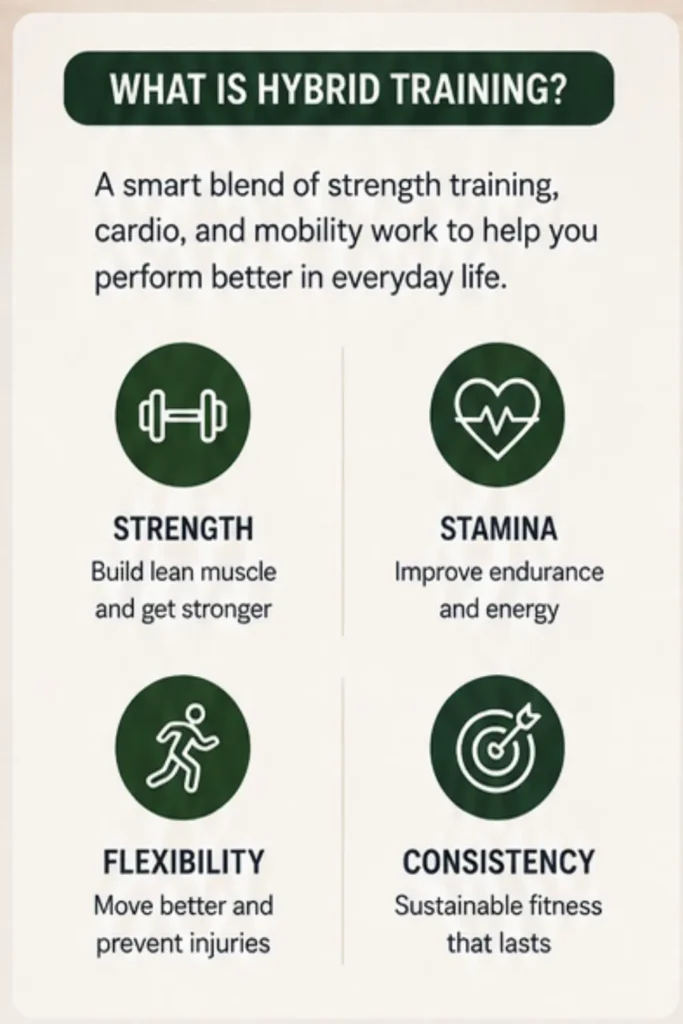
Hybrid training is a balanced approach to fitness that combines strength training and cardiovascular exercise within the same routine.
Instead of focusing on just one goal, you train your body to perform well across multiple areas. You build muscle, improve stamina, and enhance overall physical performance at the same time.
A typical hybrid routine might include:
Strength workouts such as squats, presses, and deadlifts
Cardio sessions like running, cycling, or brisk walking
Functional exercises that improve real-life movement
The idea is not to become the strongest or the fastest person in a single discipline. It is to become capable, balanced, and consistent in your overall fitness.
Why Hybrid Training Makes Sense for Beginners
When you are just starting out, your body responds quickly to almost any form of exercise. This makes it the perfect time to build a well-rounded foundation.
Hybrid training works especially well for beginners because it keeps things interesting and prevents burnout. Doing the same type of workout every day can quickly become boring. Mixing strength and cardio keeps your routine engaging and motivating.
It also helps you avoid a common mistake. Many beginners either overdo cardio and neglect strength, or focus only on lifting without building endurance. Hybrid training solves this by giving both equal importance.
The Real Benefits of Hybrid Training
- Balanced Physical Development
One of the biggest advantages of hybrid training is that it develops your body evenly. Strength training helps you build muscle and improve bone density, while cardio strengthens your heart and lungs.
Together, they create a body that is not just strong or lean, but functional and capable.
- Better Fat Loss and Body Composition
If your goal is to lose fat or improve how your body looks, hybrid training can be very effective.
Cardio helps burn calories during the workout, while strength training increases muscle mass. More muscle means a higher resting metabolism, which helps your body burn more calories even when you are not exercising.
- Improved Energy and Daily Performance
You will notice the benefits of hybrid training outside the gym as well. Everyday tasks such as climbing stairs, carrying groceries, or even staying active throughout the day become easier.
You feel less tired, more energetic, and more in control of your body.
- Time Efficiency
Not everyone has hours to spend at the gym. Hybrid training allows you to combine different types of workouts into a structured plan, making it easier to stay consistent even with a busy schedule.
- Reduced Risk of Injury
Training different systems of the body helps reduce overuse injuries. Instead of stressing the same muscles and joints repeatedly, you distribute the load more evenly.
Adding mobility work and recovery sessions further supports joint health and flexibility.
Key Elements of a Hybrid Training Program
To get the most out of hybrid training, your routine should include a mix of the following components.
- Strength Training
This forms the foundation of your program. Focus on compound movements that work multiple muscle groups at once. These include squats, deadlifts, push-ups, rows, and presses.
You do not need heavy weights in the beginning. Even bodyweight exercises can be very effective when performed correctly.
- Cardiovascular Training
Cardio improves your endurance and heart health. As a beginner, you can start with low to moderate intensity activities such as walking, jogging, or cycling.
As your fitness improves, you can include interval training, where you alternate between short bursts of effort and rest.
- Functional Movement
Functional exercises train your body for real-life activities. Movements like lunges, carries, and rotational exercises improve coordination, balance, and stability.
These are especially useful for preventing injuries and improving everyday movement.
- Mobility and Recovery
Recovery is often overlooked, but it is just as important as training itself. Stretching, light yoga, and mobility exercises help your muscles recover and improve flexibility.
Good recovery also reduces soreness and keeps you consistent in the long run.
How to Start Hybrid Training
Starting something new can feel overwhelming, but hybrid training does not need to be complicated.
Begin with a Simple Schedule
Start with three to four workout days per week. This gives your body enough stimulus to improve while still allowing time for recovery.
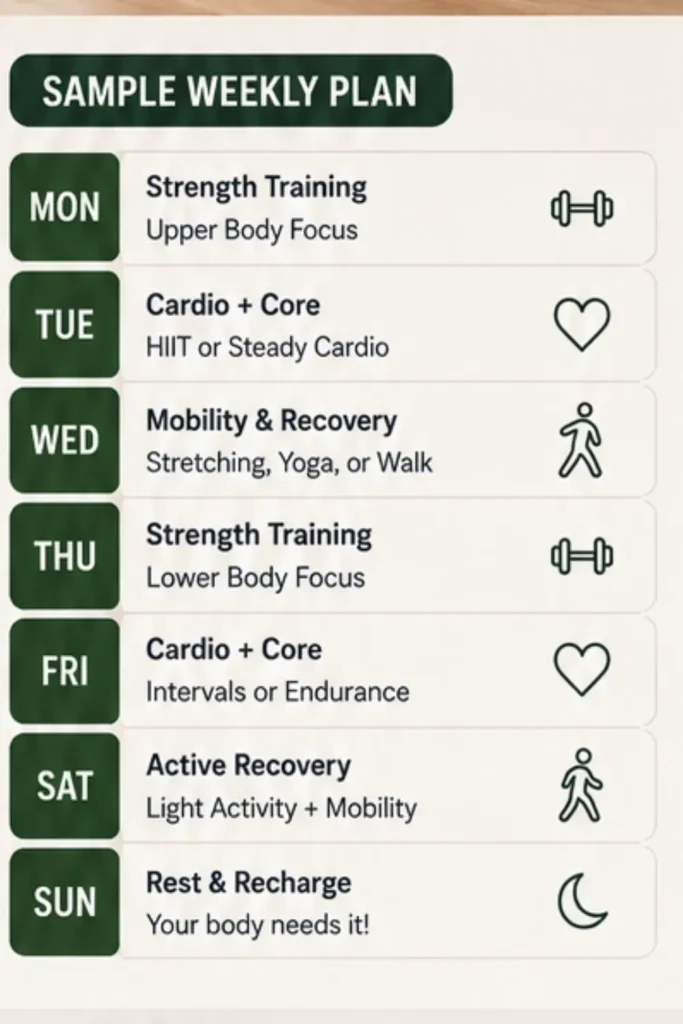
A simple weekly structure could look like this:
- Day 1: Strength training
- Day 2: Cardio
- Day 3: Rest or light activity
- Day 4: Strength training
- Day 5: Cardio or mixed session
- Day 6: Active recovery
- Day 7: Rest
Keep Your Workouts Short and Focused
You do not need long sessions. A well-structured 40 to 50 minute workout is more than enough for beginners.
Focus on quality rather than quantity. Proper form and controlled movements matter more than doing too much.
Learn Proper Technique
Take time to learn the basics of each exercise. Poor form not only reduces effectiveness but also increases the risk of injury.
If possible, start with bodyweight exercises or light weights until you feel comfortable.
Progress Gradually
Your body needs time to adapt. Increase your weights, intensity, or duration slowly over time.
Trying to do too much too soon is one of the main reasons people quit or get injured.
A Simple Beginner Hybrid Workout
Here is an easy full-body session you can try:
- Start with a 5 to 10 minute warm-up. This can include light jogging, jumping jacks, and dynamic stretches.
- Then move into a strength circuit:
- Squats for 10 repetitions
- Push-ups for 8 to 10 repetitions
- Dumbbell rows for 10 repetitions
- Lunges for 10 repetitions per leg
- Repeat this circuit 2 to 3 times with short rest periods.
- Finish with a cardio segment. This can be 10 to 15 minutes of steady jogging, cycling, or a simple interval routine.
- End your session with stretching and deep breathing to help your body recover.
Common Mistakes to Avoid
- Doing Too Much Too Early
It is natural to feel excited in the beginning, but pushing too hard can lead to fatigue or injury. Consistency is more important than intensity.
- Skipping Recovery
Rest days are not a sign of weakness. They are essential for progress. Without proper recovery, your body cannot repair and grow stronger.
- Ignoring Nutrition
Your workouts are only one part of the equation. Eating a balanced diet with enough protein, carbohydrates, and healthy fats supports your performance and recovery.
- Lack of Structure
Random workouts can slow your progress. Having a simple plan helps you stay focused and track improvement over time.
Tips for Staying Consistent
Consistency is what drives results. To stay on track:
- Set realistic goals
- Track your workouts
- Keep your routine flexible
- Celebrate small progress
- Listen to your body
You do not need to be perfect. You just need to show up regularly.
Is Hybrid Training Right for You?
Hybrid training is suitable for most people, especially beginners who want a balanced approach to fitness.
It works well if you want to:
- Improve overall fitness
- Lose fat while maintaining muscle
- Stay active without getting bored
- Build a sustainable long-term routine
However, if you are training for a specific sport at a competitive level, you may need a more specialized program.
Conclusion:
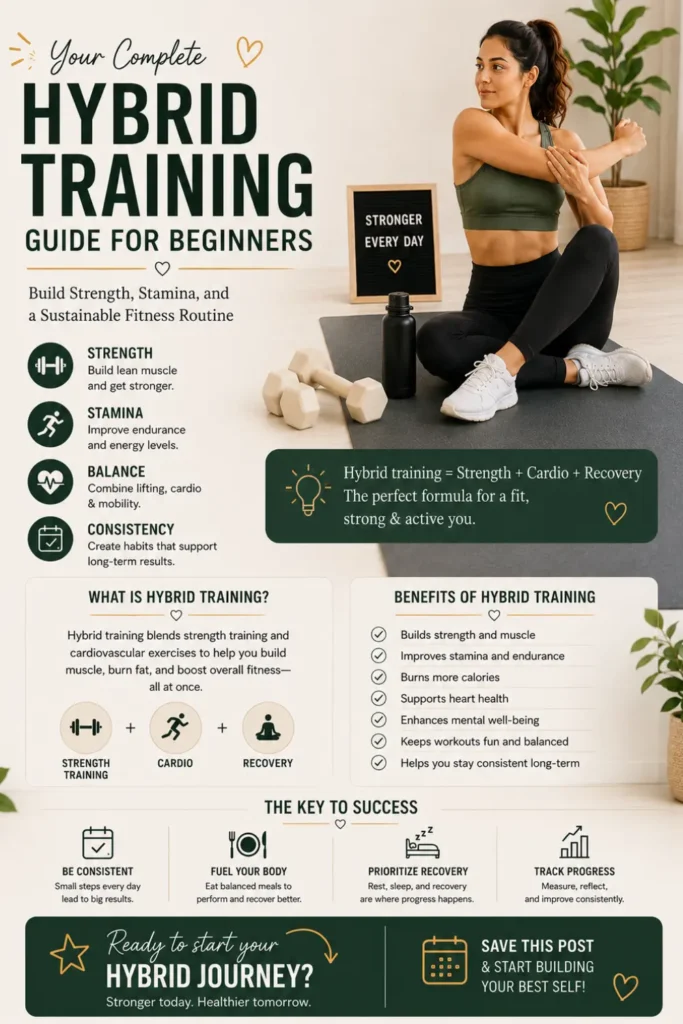
Hybrid training is not just a trend. It is a practical and sustainable way to approach fitness.
By combining strength and cardio, you prepare your body for real-life demands. You become stronger, more energetic, and more resilient over time.
The key is to keep things simple. Start with a basic plan, focus on consistency, and allow your body to progress naturally.
Fitness does not need to be complicated. When done right, it becomes a part of your lifestyle, not a temporary effort. Hybrid training offers a balanced path to get there.