
Most people think sleeping longer automatically means sleeping better. In reality, the real magic of sleep often happens in a specific stage that many people rarely think about: deep sleep.
You can spend eight hours in bed and still wake up feeling mentally foggy, physically drained, and strangely unrefreshed. If you want to understand the full science of sleep cycles, circadian rhythm, and sleep quality, you can also read our complete resource: The Complete Guide to Better Sleep: Science-Backed Strategies for Deep Restorative Rest in 2026.
In many cases, the issue is not the quantity of sleep. It is the quality of it. More specifically, it is the amount of deep sleep your body is getting.
Deep sleep, also known as slow-wave sleep (SWS) or Stage 3 non-REM sleep, is the most physically restorative part of the sleep cycle. During this stage, brain waves slow down significantly, heart rate drops, breathing becomes more regular, tissues repair, growth hormone is released, and your brain gets to work processing memories and clearing metabolic waste. According to the National Heart, Lung, and Blood Institute, deep sleep plays a critical role in physical recovery, immune function, and overall health.
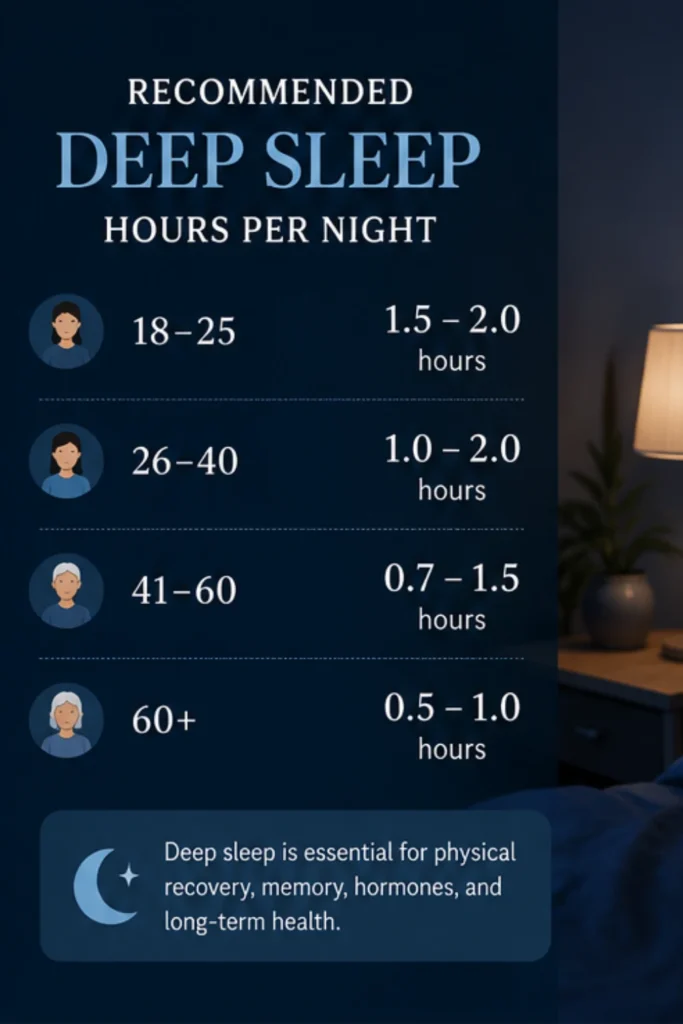
But how much deep sleep should you actually be getting each night? The answer can vary by age. We break it down here: How Much Deep Sleep Do Adults Really Need by Age?
The challenge is that modern life is not exactly designed to support deep sleep. Late-night screen exposure, irregular schedules, stress, caffeine, alcohol, indoor lifestyles, and poor sleep environments can quietly reduce the amount of restorative sleep your body gets each night.
The good news is that improving deep sleep usually does not require expensive sleep gadgets, complicated supplements, or extreme routines. In many cases, small changes rooted in sleep science can make a measurable difference.
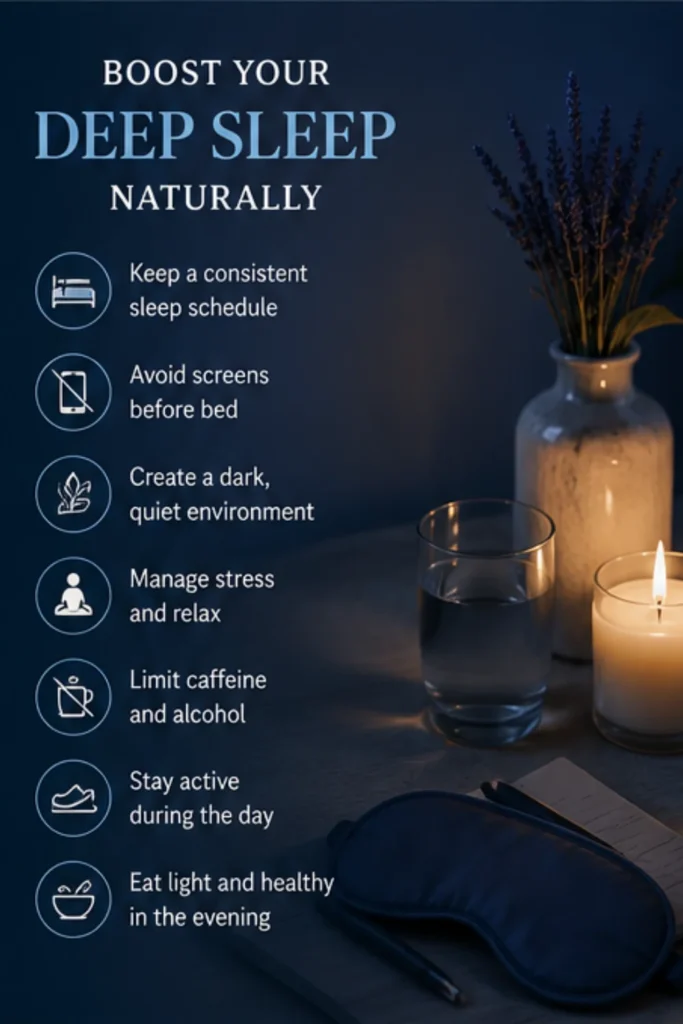
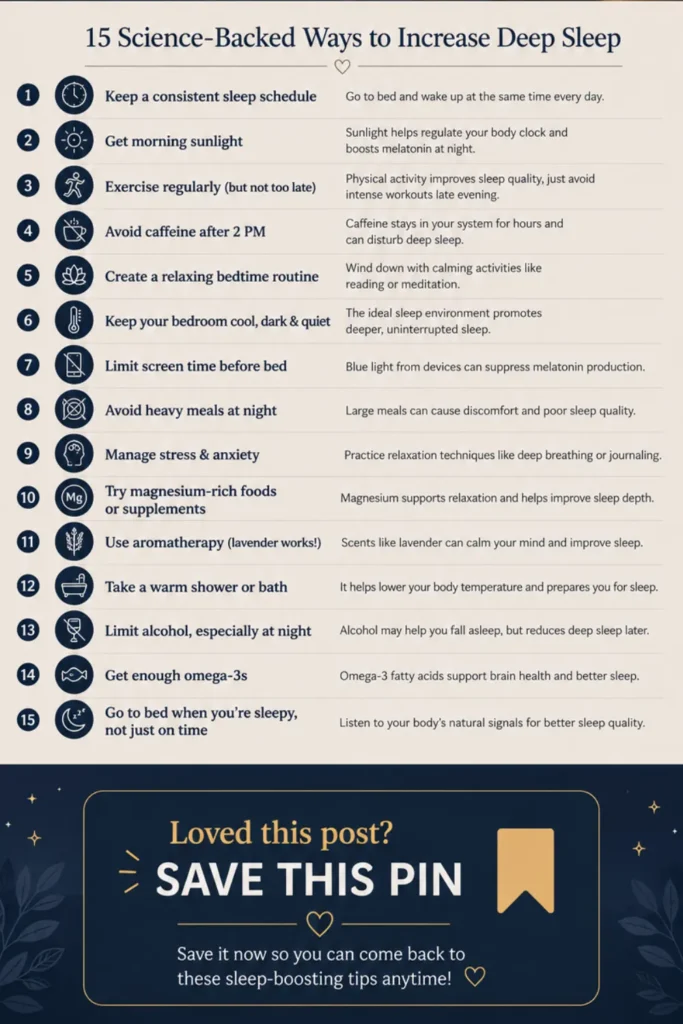
After reviewing findings from sleep researchers, clinical institutions, circadian rhythm studies, and behavioral sleep science, here are 15 evidence-based strategies that can help you naturally increase deep sleep and wake up feeling genuinely restored.
1. Protect Your Sleep Schedule Like an Appointment
One of the strongest predictors of healthy sleep is consistency.
Your body operates on a 24-hour internal clock called the circadian rhythm, which regulates hormones, body temperature, alertness, digestion, and sleep timing. Researchers at the National Institutes of Health explain that when sleep timing stays consistent, the brain becomes better at anticipating when to release melatonin and when to transition into deeper sleep stages.
When bedtime shifts dramatically from one night to the next, your brain has to keep recalibrating.
This is why sleeping from 10 PM to 6 AM on weekdays and 1 AM to 9 AM on weekends can leave you feeling jet-lagged even without traveling.
What helps:
- Go to bed at roughly the same time every night
- Wake up at the same time, even on weekends
- Keep your schedule within a 30-minute range whenever possible
Consistency is not glamorous, but in sleep science, it works.
2. Stop Sacrificing the First Half of the Night
Many people stay up late assuming they can “catch up” by sleeping in.
Sleep physiology does not work that way.
According to the National Institute of Neurological Disorders and Stroke, deep sleep is heavily concentrated in the first few sleep cycles of the night. In other words, the hours before midnight often carry a disproportionate share of your restorative sleep.
When bedtime gets pushed later, deep sleep is often the first thing lost.
This helps explain why someone who sleeps from 2 AM to 10 AM may not feel as restored as someone who sleeps from 10:30 PM to 6:30 AM.
What helps:
- Identify what keeps you awake unnecessarily
- Reduce late-night scrolling or “one more episode” habits
- Shift bedtime earlier in small 15-minute increments if needed.
3. Get Bright Light Within the First Hour of Waking
Morning light is one of the most powerful tools for better sleep at night.
Exposure to natural sunlight shortly after waking helps regulate the release of cortisol early in the day while supporting melatonin production later in the evening. The National Heart, Lung, and Blood Institute highlights light exposure as one of the primary regulators of the sleep-wake cycle.
The effect is simple but powerful. Better mornings often lead to better nights.
What helps:
- Step outside within 30 to 60 minutes of waking
- Spend at least 10 to 20 minutes in natural daylight
- On cloudy days, stay out slightly longer
If you work indoors, this habit becomes even more important.
4. Move Your Body During the Day
Exercise does more than improve fitness. It changes sleep architecture.
Sleep researchers consistently find that regular physical activity can increase slow-wave sleep while helping people fall asleep faster and wake up less during the night.
Aerobic exercise, resistance training, and even brisk walking appear to support deeper sleep.
Especially effective:
- Walking outdoors
- Strength training
- Cycling
- Swimming
- Yoga
- Hiking
The key is consistency.
Try to avoid intense exercise right before bed, as elevated body temperature and adrenaline may delay sleep in some people.
5. Respect Caffeine’s Long Half-Life
Caffeine is one of the most underestimated sleep disruptors.
Even if you fall asleep easily after coffee, caffeine can still reduce sleep depth.
Sleep researchers have shown that caffeine can remain active in the body for several hours, and in sensitive individuals, even afternoon caffeine may interfere with deep sleep.
What helps:
- Cut off caffeine by early afternoon
- If you are sensitive, stop by noon
- Watch hidden caffeine sources such as tea, dark chocolate, energy drinks, and pre-workouts
Many people improve sleep simply by moving coffee earlier.
6. Rethink That Nightcap
Alcohol often creates the illusion of better sleep because it can make you feel sleepy faster.
Physiologically, however, it tells a different story.
Sleep medicine researchers have found that alcohol can fragment sleep, suppress REM cycles, increase nighttime awakenings, and reduce overall sleep quality.
It may help you fall asleep. It rarely helps you sleep better.
What helps:
- Avoid alcohol close to bedtime
- If drinking socially, stop at least three to four hours before sleep
- Hydrate well.
7. Create a Digital Sunset
Your brain responds strongly to light, especially blue light.
Researchers from Harvard Medical School have shown that blue-spectrum light can suppress melatonin and delay circadian timing.
That late-night social media session may feel harmless, but biologically, your brain may interpret it as daytime.
What helps:
- Turn off bright screens 60 to 90 minutes before bed
- Use warm lighting after sunset
- Switch to reading, stretching, journaling, or conversation
The goal is to signal safety, calm, and darkness.
8. Sleep in a Cooler Environment
Temperature plays a surprisingly large role in sleep quality.
As you prepare for sleep, your core body temperature naturally drops. A cooler environment supports this transition.
The Sleep Foundation notes that most adults sleep best in rooms between 16 and 19°C.
What helps:
- Lower the room temperature
- Use breathable sheets
- Choose lighter sleepwear
- Avoid overheating under heavy blankets
Small temperature changes can produce noticeable results.
9. Make Darkness Non-Negotiable
Even small amounts of artificial light can influence melatonin production.
Researchers at the National Institutes of Health have found that nighttime light exposure can affect circadian rhythm timing and sleep quality.
Streetlights, device notifications, charging indicators, and hallway lighting can all quietly interfere.
What helps:
- Use blackout curtains
- Remove unnecessary electronics
- Cover LED lights
- Try a sleep mask if needed
Darkness is not just comforting. It is biological.
10. Lower Your Stress Before Bed
Deep sleep requires the nervous system to feel safe.
If your mind is replaying emails, deadlines, conversations, or tomorrow’s responsibilities, your body may stay in a low-level stress state.
The American Psychological Association has repeatedly linked chronic stress with poor sleep quality.
What helps:
- Slow breathing exercises
- Guided meditation
- Light stretching
- Journaling
- Prayer
- Gratitude practice
Even ten quiet minutes can shift the body toward recovery.
11. Use Warm Water to Trigger Cooling
A warm shower before bed may sound stimulating, but physiologically it often has the opposite effect.
Warm water temporarily raises skin temperature, which encourages the body to cool itself afterward. That cooling process can support sleep onset.
Sleep experts from the Sleep Foundation suggest bathing 60 to 90 minutes before bed may improve sleep quality.
What helps:
- Take a warm shower or bath in the evening
- Keep lighting soft
- Avoid turning it into an energizing routine
- Think relaxation, not stimulation.
12. Finish Eating Earlier
Late-night meals can force your body to keep digesting when it should be winding down.
Heavy meals, spicy foods, sugary desserts, and oversized portions may increase body temperature, reflux risk, and metabolic activity.
All of these can interfere with deep sleep.
What helps:
- Finish dinner two to three hours before bed
- Keep late snacks light
- Avoid overly rich meals at night
Your digestive system also appreciates consistency.
13. Eat More Fiber
Diet quality affects sleep more than most people realize.
Researchers from Columbia University found that people who consumed more fiber experienced deeper, more restorative slow-wave sleep.
Highly processed foods, on the other hand, were associated with lighter sleep.
Fiber-rich choices:
- Oats
- Lentils
- Beans
- Chia seeds
- Berries
- Vegetables
- Whole grains
What you eat during the day can influence how deeply you sleep at night.
14. Build a Predictable Wind-Down Routine
The brain responds to patterns.
When you repeat the same calming behaviors before bed, your nervous system begins to associate those actions with sleep.
Over time, this creates what behavioral sleep specialists call a conditioned sleep response.
Try a 30-minute evening routine:
- Dim the lights
- Put devices away
- Stretch gently
- Read something calming
- Journal
- Listen to soft music
Simple routines often outperform complicated biohacks.
15. Do Not Ignore Persistent Sleep Problems
Sometimes lifestyle is not the root issue.
Snoring, sleep apnea, reflux, chronic pain, restless legs, medication side effects, anxiety disorders, and hormonal changes can all reduce deep sleep.
According to the American Academy of Sleep Medicine, untreated sleep disorders can significantly affect long-term physical and cognitive health.
Consider speaking with a healthcare professional if you:
- Wake up gasping
- Snore loudly
- Wake with headaches
- Feel exhausted despite sleeping enough
- Struggle with persistent daytime sleepiness
Sometimes the most effective sleep strategy is getting the right diagnosis.
Final Thoughts:
Deep sleep is where the real recovery happens.
It is where muscles repair, hormones rebalance, immune defenses strengthen, and the brain performs essential overnight maintenance.
The encouraging truth is that better deep sleep usually does not come from doing one dramatic thing. It often comes from doing many small things consistently.
Morning sunlight. A stable sleep schedule. Less late-night stimulation. Better stress management. Smarter nutrition. A cooler, darker bedroom.
When your daily habits support your biology, deep sleep often follows naturally.
And when deep sleep improves, almost everything else tends to improve with it.