
Pregnancy brings many changes, and for many women, one of the most noticeable ones is thicker, fuller hair. During those months, hair often feels healthier, shinier, and easier to manage. But after childbirth, many new mothers notice the exact opposite happening. Hair starts falling out in the shower, on the pillow, and while brushing. Sometimes it feels like too much, and naturally, it can be worrying.
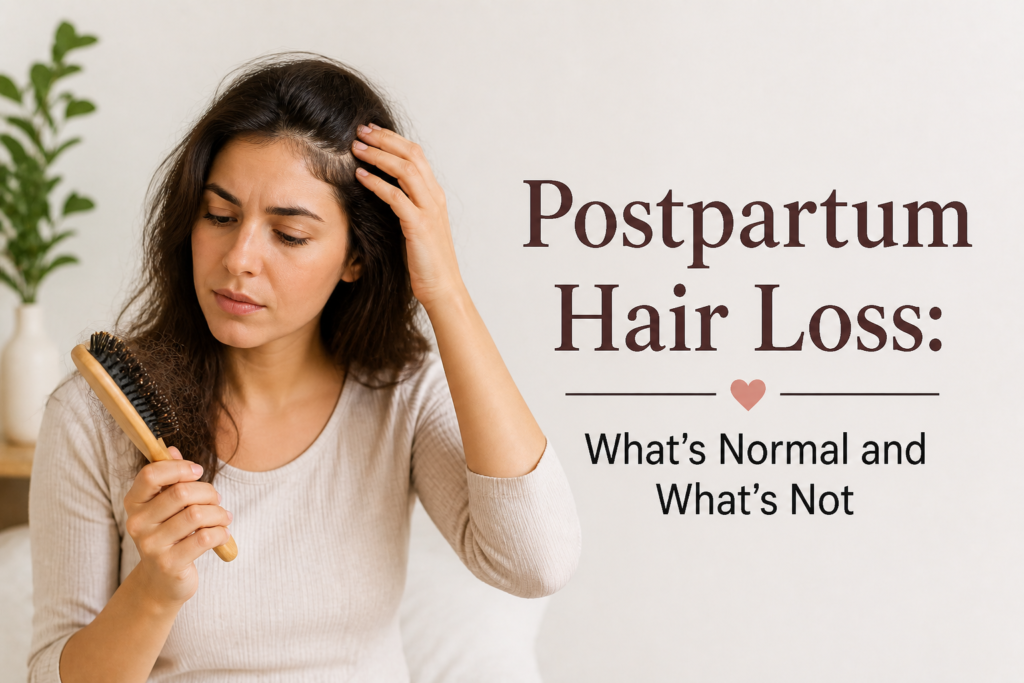
The good news is that postpartum hair loss is very common and, in most cases, completely normal. It is usually a temporary phase that happens as the body adjusts after pregnancy. Still, there are times when hair loss may signal something more than normal shedding.
Knowing what is expected and what may need medical attention can help reduce unnecessary stress during an already overwhelming postpartum period.
Understanding Postpartum Hair Loss
Postpartum hair loss is the increased shedding of hair that happens after giving birth. Doctors often refer to it as telogen effluvium, but simply put, it is a temporary shift in the normal hair growth cycle.
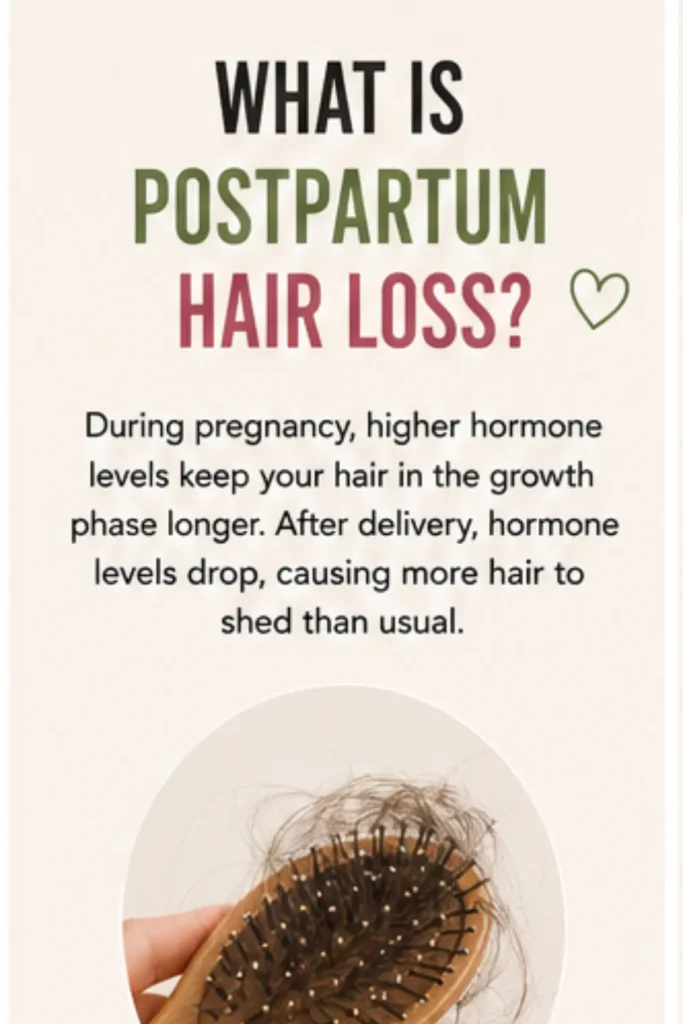
To understand why this happens, it helps to know what pregnancy does to your hair. During pregnancy, hormone levels, especially estrogen, rise significantly. These hormones keep more hair in the growth phase for longer, which means less daily shedding. This is why many women notice their hair becoming thicker during pregnancy.
After delivery, hormone levels drop back to normal. As a result, all the extra hair that stayed in place during pregnancy begins to shed. This can make it feel like you are losing a huge amount of hair all at once.
In reality, much of it is delayed shedding rather than actual abnormal hair loss.
When Does It Usually Start?
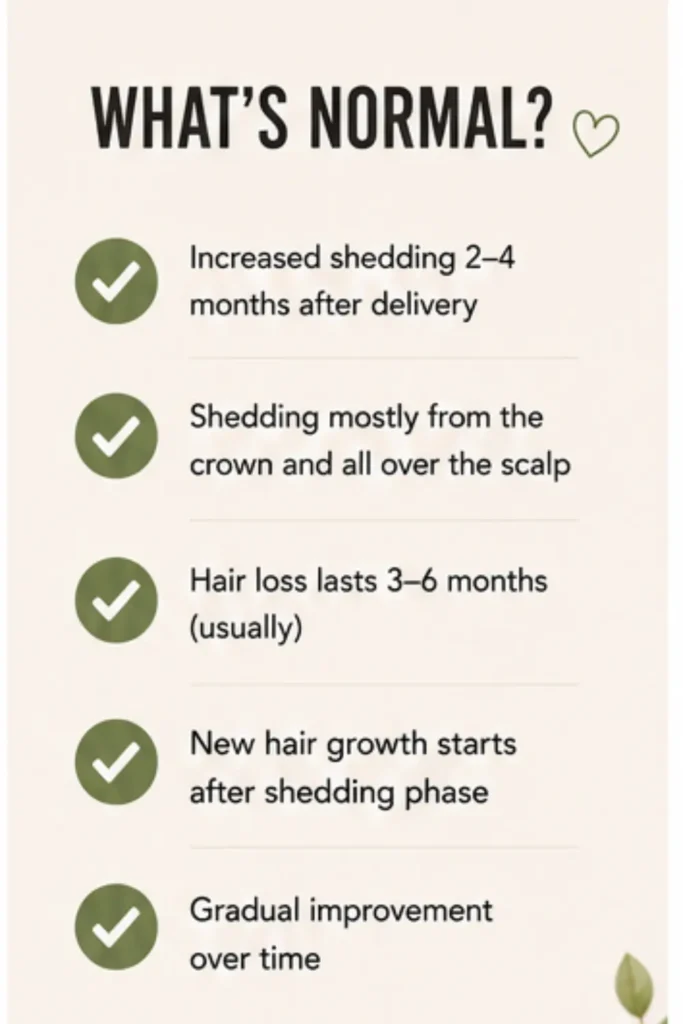
Most women begin to notice postpartum hair loss around two to four months after giving birth. For many, the shedding becomes most obvious around the third month postpartum.
This timing often catches new mothers off guard because it happens after the initial recovery period. Just when life with a newborn starts to settle a little, hair loss suddenly becomes another concern.
Common signs include:
- Hair collecting in the shower drain
- More hair than usual on your hairbrush
- Loose strands on clothes and pillows
- Thinning around the temples
- A wider-looking hair part
- Noticeable baby hairs around the front hairline later on
Even though it may look dramatic, this type of shedding is often part of normal postpartum recovery.
How Much Hair Loss Is Normal?
On a normal day, most people lose around 50 to 100 strands of hair. During postpartum shedding, that number can increase significantly.
This is why many mothers feel shocked when they see clumps of hair coming out while washing or brushing. It may seem extreme, but it is often just the body catching up after months of reduced shedding during pregnancy.
Some women may notice only mild thinning, while others feel like they are losing hair rapidly. Both experiences can still fall within the normal range.
Hair thinning around the forehead and temples is especially common and usually improves with time.
How Long Does Postpartum Hair Loss Last?
In most cases, postpartum hair loss lasts between six and twelve months. For many women, the shedding reaches its peak around four to six months after childbirth and then gradually slows down.
By the time the baby turns one, hair growth often starts returning to its usual pattern.
That said, recovery can feel slow. Hair does not grow back overnight, and the process requires patience. Many women first notice regrowth as short baby hairs around the hairline, especially near the forehead and temples.
These little signs are often reassuring reminders that the body is healing.
Other Reasons Hair Loss May Feel Worse
Hormones are the main reason behind postpartum shedding, but they are not the only factor. Several other postpartum challenges can make hair loss seem more intense.
- Physical and Emotional Stress
Giving birth is a major physical event, and recovery takes time. Add sleepless nights, emotional changes, and the demands of caring for a newborn, and stress levels can rise quickly.
Stress can affect the body in many ways, including the hair growth cycle, making shedding more noticeable.
- Nutritional Deficiencies
After childbirth, the body needs nutrients for healing, recovery, and often breastfeeding. If your diet is low in iron, protein, vitamin D, or other important nutrients, hair thinning can become worse.
Iron deficiency, in particular, is a common reason for prolonged postpartum hair loss.
- Thyroid Changes
Some women develop thyroid problems after pregnancy, including postpartum thyroiditis. Since thyroid issues can also cause hair loss, they may be mistaken for normal postpartum shedding.
If hair fall continues longer than expected or comes with other symptoms like fatigue or weight changes, thyroid health should be checked.
- Genetics
Some women are naturally more likely to experience noticeable postpartum shedding than others. Family history, hair thickness, and hormonal sensitivity can all play a role.
When Hair Loss Is Not Normal
While postpartum shedding is common, there are certain signs that should not be ignored.
- Hair Loss Lasting Beyond One Year
If heavy shedding continues long after your baby’s first birthday, it may not be normal postpartum hair loss anymore.
Persistent thinning could be linked to anemia, thyroid issues, hormonal imbalance, or chronic stress.
- Bald Patches
Normal postpartum hair loss usually causes overall thinning, not round or patchy bald spots.
If you notice sudden bald patches, it could point to conditions like alopecia areata, which requires medical attention.
- Scalp Irritation
Hair loss with itching, burning, redness, pain, or severe flaking may suggest a scalp infection or inflammation rather than normal shedding.
This should be checked by a healthcare professional.
Hair Loss Immediately After Delivery
Postpartum shedding usually starts a few months after childbirth, not immediately.
If you experience sudden heavy hair fall right after delivery, another cause may be involved.
Other Symptoms Alongside Hair Loss
Hair loss combined with symptoms like extreme tiredness, dizziness, rapid weight changes, cold intolerance, mood swings, or heart palpitations may suggest a deeper health issue.
These signs should not be ignored.
Can Postpartum Hair Loss Be Prevented?
The truth is, postpartum hair loss cannot be completely prevented because it is mainly caused by natural hormonal changes.
However, there are ways to support healthy regrowth and reduce unnecessary breakage.
Helpful Tips During Recovery
- Focus on Good Nutrition
Eating a balanced diet helps your body recover from the inside out. Include iron-rich foods, lean proteins, leafy greens, healthy fats, and foods rich in zinc and vitamin D.
Healthy hair starts with proper nourishment.
- Continue Prenatal Vitamins if Recommended
Some doctors suggest continuing prenatal vitamins after childbirth, especially while breastfeeding. This depends on individual health needs, so professional guidance is always best.
- Be Gentle With Your Hair
Avoid tight hairstyles, harsh brushing, excessive heat styling, and strong chemical treatments during this period.
These can increase breakage and make hair thinning appear worse.
- Use Lightweight Hair Products
Heavy conditioners can weigh hair down and make thinning more noticeable. Lightweight volumizing shampoos and conditioners may help create a fuller look.
- Consider a Fresh Haircut
Sometimes, a shorter hairstyle can make hair feel healthier and easier to manage. It can also help reduce the stress of seeing long strands falling out.
- Speak to a Doctor if Needed
If hair loss feels excessive, lasts too long, or comes with other symptoms, it is worth talking to a doctor or dermatologist.
Sometimes simple blood tests can reveal issues like low iron or thyroid imbalance.
The Emotional Side of Postpartum Hair Loss
People often say postpartum hair loss is “normal,” but that does not make it easy.
For many women, hair is closely connected to confidence and identity. Watching it fall out during a time that is already physically and emotionally demanding can feel upsetting.
Between healing from childbirth, adjusting to motherhood, and dealing with constant hormonal changes, hair loss can feel like one more thing to handle.
It is okay to feel frustrated by it.
Taking care of your emotional well-being is just as important as managing the physical side of postpartum recovery.
Conclusion
Postpartum hair loss can be stressful, especially when it seems sudden and excessive. But for most women, it is simply part of the body’s natural adjustment after pregnancy.
If the shedding starts a few months after delivery, improves within six to twelve months, and does not involve bald patches or severe symptoms, it is usually normal.
The important thing is knowing when to be patient and when to seek help.
If the hair loss becomes prolonged, patchy, painful, or comes with symptoms like fatigue or weight changes, it is worth getting checked.
Most importantly, remember that your body is going through recovery, not failure.
This phase may feel frustrating now, but like many postpartum changes, it will pass with time.