
Belly fat is one of the most common health concerns for people trying to improve their fitness, confidence, and overall wellness. While many people focus on appearance, the real concern goes much deeper than aesthetics. Excess belly fat, especially the fat stored around internal organs, can significantly increase the risk of chronic diseases such as heart disease, type 2 diabetes, fatty liver disease, and high blood pressure.

Understanding the science behind belly fat is the first step toward reducing it effectively. Rather than chasing quick fixes or fad diets, learning how belly fat works helps create a sustainable path to better health.

What Is Belly Fat?
Not all belly fat is the same. There are two main types:
- Subcutaneous Fat
This is the soft fat located just under the skin. It is the type you can pinch with your fingers around your waist, thighs, or arms. While too much subcutaneous fat can still affect health, it is generally less dangerous than visceral fat. About 90% of body fat in most people is subcutaneous.
- Visceral Fat
This is the more dangerous type of belly fat. Visceral fat lies deep inside the abdominal cavity, surrounding organs like the liver, intestines, and pancreas. Unlike subcutaneous fat, it is metabolically active and releases hormones, inflammatory chemicals, and proteins that can negatively affect the body.
This is why someone can appear slim on the outside and still have unhealthy levels of belly fat internally.
Why Belly Fat Is More Dangerous Than Other Fat
The location of fat matters more than many people realize. Fat stored around the hips and thighs behaves differently from fat stored around the abdomen.
Visceral fat acts almost like an endocrine organ. It releases substances called cytokines, which promote low-grade inflammation throughout the body. Chronic inflammation is linked to insulin resistance, cardiovascular disease, and even certain cancers. It also produces compounds that can raise blood pressure and negatively impact cholesterol levels.
Research also shows that abdominal obesity is strongly associated with:
- Type 2 diabetes
- Heart disease
- Stroke
- Fatty liver disease
- High blood pressure
- Hormonal imbalance
- Sleep disturbances
- Reduced metabolic efficiency
In simple terms, belly fat is not just stored energy. It actively influences how your body functions.
What Causes Belly Fat?
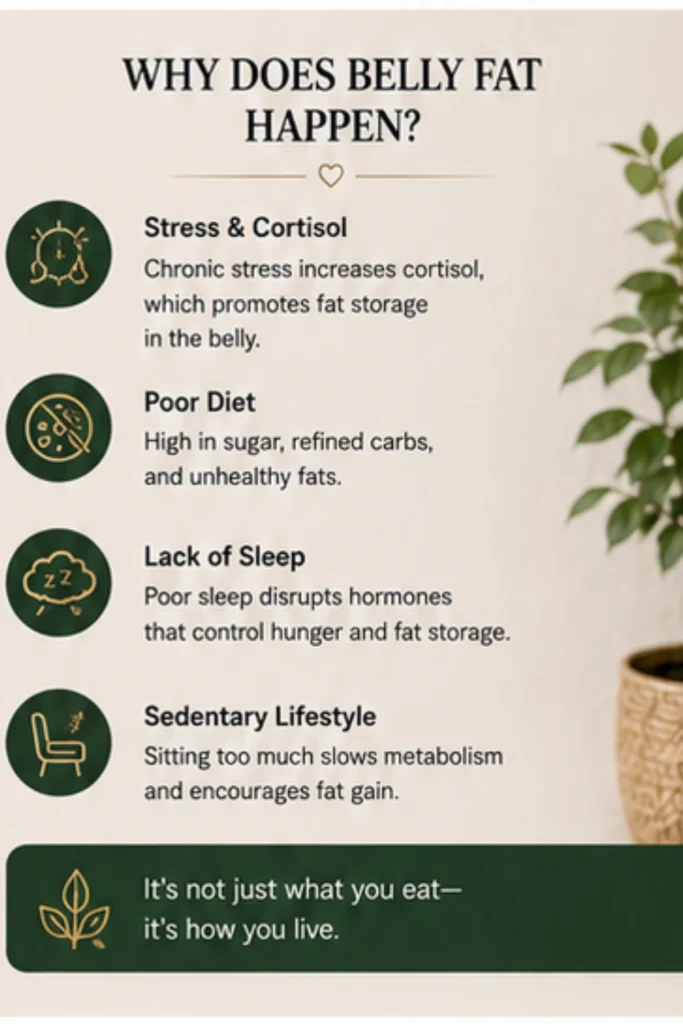
There is no single cause of belly fat. It usually develops due to a combination of lifestyle, hormonal, and genetic factors.
- Poor Diet
Frequent consumption of refined carbohydrates, sugary drinks, processed foods, and excess calories contributes significantly to abdominal fat storage. Diets high in sugar and saturated fats can increase visceral fat accumulation.
- Lack of Physical Activity
A sedentary lifestyle reduces calorie expenditure and slows metabolism. Less movement means more energy gets stored as fat.
- Chronic Stress
Stress increases the production of cortisol, often called the stress hormone. Elevated cortisol levels are linked to increased fat storage around the abdominal area
- Poor Sleep
Sleep deprivation affects hunger hormones such as ghrelin and leptin, increasing cravings and appetite. It also contributes to hormonal imbalance and weight gain.
- Aging
As people age, muscle mass naturally decreases and metabolism slows down. Hormonal changes, especially during midlife, can also shift fat storage toward the abdominal region.
- Genetics
Some people are genetically more likely to store fat around the waist. In some populations, including South Asians, abdominal fat accumulation can happen even at a normal BMI.
Why Spot Reduction Does Not Work
One of the biggest myths in fitness is the idea of “spot reduction,” the belief that doing endless crunches will specifically burn belly fat.
The truth is, fat loss does not work that way.
Your body loses fat systemically, not from one targeted area. While abdominal exercises strengthen the core muscles, they do not directly burn fat from the stomach area.
Reducing belly fat requires overall fat loss through consistent nutrition, movement, sleep, and stress management.
How to Reduce Belly Fat Effectively
The good news is that visceral fat responds well to healthy lifestyle changes and can often be reduced faster than subcutaneous fat with consistency.
- Prioritize Strength Training and Cardio
A combination of resistance training and aerobic exercise is highly effective.
Strength training helps build muscle, which improves metabolism and increases calorie burn even at rest. Cardio activities like brisk walking, cycling, swimming, and jogging help burn calories and improve heart health.
Even 30 to 45 minutes of regular movement most days of the week can make a major difference.
- Improve Diet Quality
Instead of focusing only on eating less, focus on eating better. Include:
- Lean proteins
- Whole grains
- Fruits and vegetables
- Healthy fats
- High-fiber foods
- Plenty of water
- Reduce: Sugary drinks, Fast food, Ultra-processed snacks, Excess alcohol, Refined carbs
Research suggests that better diet quality combined with physical activity can significantly improve visceral fat reduction.
- Manage Stress
Stress management is often overlooked but extremely important.
Helpful strategies include:
- Meditation
- Deep breathing
- Yoga
- Journaling
- Walking outdoors
- Spending time with loved ones
- Lower stress often means lower cortisol, which supports healthier fat distribution.
Improve Sleep Quality
Aim for 7 to 9 hours of quality sleep each night.
Consistent sleep supports appetite regulation, hormone balance, recovery, and better energy for exercise.
- Monitor Waist Circumference
A tape measure can sometimes be more useful than a weighing scale.
Waist circumference gives a better clue about visceral fat than BMI alone. Experts often recommend paying attention to increasing waist size as a warning sign of unhealthy fat accumulation.
- Sustainable Progress Over Quick Fixes
Detox teas, fat burners, and “belly fat blasting” products often promise fast results, but lasting change comes from consistency, not shortcuts.
Healthy belly fat reduction takes time. The goal should not be rapid weight loss, but long-term metabolic health and improved well-being.
Small daily habits, walking more, sleeping better, choosing whole foods, and managing stress, create the biggest long-term results.

Conclusion:
Belly fat is more than a cosmetic concern. It is a serious health marker that reflects what may be happening inside the body. Visceral fat, in particular, increases the risk of major chronic diseases because it directly affects hormones, inflammation, and metabolism.
The good news is that it is highly responsive to lifestyle changes.
By focusing on balanced nutrition, regular exercise, quality sleep, and stress control, reducing belly fat becomes both realistic and sustainable. The science is clear: there is no magic trick, just smart, consistent habits that support lifelong health.
True wellness begins from the inside out.