
In a world full of supplements, wellness trends, and miracle health solutions, one of the most powerful remedies is often the simplest and most overlooked: water. It is affordable, accessible, and essential for life. While people spend heavily on vitamins, skincare products, and energy boosters, many forget that proper hydration is the foundation of good health.
Water is not just something we drink when we feel thirsty. It is the silent force behind nearly every function in the human body. From regulating body temperature to supporting digestion, improving brain function, maintaining healthy skin, and helping organs work efficiently, water plays a central role in overall wellness.
The human body is made up of about 50 to 65 percent water, depending on age, body composition, and sex. Every cell, tissue, and organ depends on water to function properly. Without enough of it, the body begins to struggle, and even mild dehydration can lead to fatigue, headaches, poor concentration, and low energy.
This is why water is often called the body’s best medicine.
Water Supports Every System in the Body
Unlike trendy health products that target only one issue, water benefits the entire body. It works behind the scenes to keep everything balanced and functioning smoothly.
1. Brain Function and Mental Clarity
Have you ever felt tired, unfocused, or irritated in the middle of the day? The problem may not be lack of sleep. It could be dehydration.
Your brain is highly sensitive to fluid loss. Even mild dehydration can affect concentration, mood, memory, and alertness. When the body lacks water, blood flow and oxygen delivery may be reduced, making it harder for the brain to perform efficiently.
Dehydration may also cause unclear thinking and mood changes. This means that something as simple as drinking enough water can improve productivity, focus, and emotional balance.
2. Digestion and Nutrient Absorption
Water is essential for a healthy digestive system. It helps break down food so your body can absorb nutrients effectively. It also supports smooth bowel movements and prevents constipation.
Many people turn to digestive supplements without realizing that low water intake may be the root cause of their discomfort. Drinking enough water helps food move properly through the digestive tract and supports healthy metabolism.
Starting your day with a glass of water can help activate digestion and prepare your body for meals ahead.
3. Healthy Kidneys and Detoxification
Your kidneys are natural filters. They remove waste and toxins from the blood and flush them out through urine. But they need enough water to do their job properly.
When hydration is low, the kidneys work harder, and waste becomes more concentrated. Over time, this may increase the risk of kidney stones and urinary issues.
Contrary to popular myths, expensive detox drinks are not the answer. Your body already has a detox system. Water helps it work better.
4. Joint and Muscle Support
Water helps lubricate joints and cushions tissues throughout the body. It also supports muscles during physical activity by maintaining electrolyte balance and preventing cramps.
If you exercise regularly, hydration becomes even more important. Losing fluids through sweat without replacing them can lead to weakness, dizziness, and reduced performance.
Many people blame tiredness on lack of fitness when dehydration is the real issue.
5. Water and Energy: The Natural Booster
One of the most common complaints in modern life is low energy. People often reach for coffee, energy drinks, or sugar-filled snacks for a quick fix. But dehydration is a hidden cause of fatigue.
When the body lacks water, the heart must work harder to pump oxygen and nutrients to cells. This can leave you feeling sluggish and drained.
Instead of relying on another cup of coffee, try drinking a glass of water first. It may be the simplest and healthiest energy boost available.
Water supports sustained energy without the crash that comes from caffeine or sugar.
6. Hydration and Weight Management
Water also plays an important role in maintaining a healthy weight.
First, water has zero calories. Replacing sugary drinks like soda, packaged juices, and sweetened coffee with water can significantly reduce daily calorie intake.
Second, drinking water before meals may help increase feelings of fullness, which can reduce overeating.
Sometimes, the body confuses thirst with hunger. People may snack when what they really need is hydration.
For those working toward weight loss or better eating habits, water is a powerful and often underestimated tool.
7. Skin Health Starts from Within
Skincare products are helpful, but true skin health begins from the inside. Hydrated skin looks fresher, smoother, and more vibrant.
When the body is dehydrated, skin may appear dull, dry, or tired. While water is not a miracle cure for every skin issue, proper hydration supports circulation and helps maintain the skin’s natural barrier.
Healthy skin is often a reflection of internal wellness, and water is one of the easiest ways to support it naturally.
How Much Water Do You Really Need?
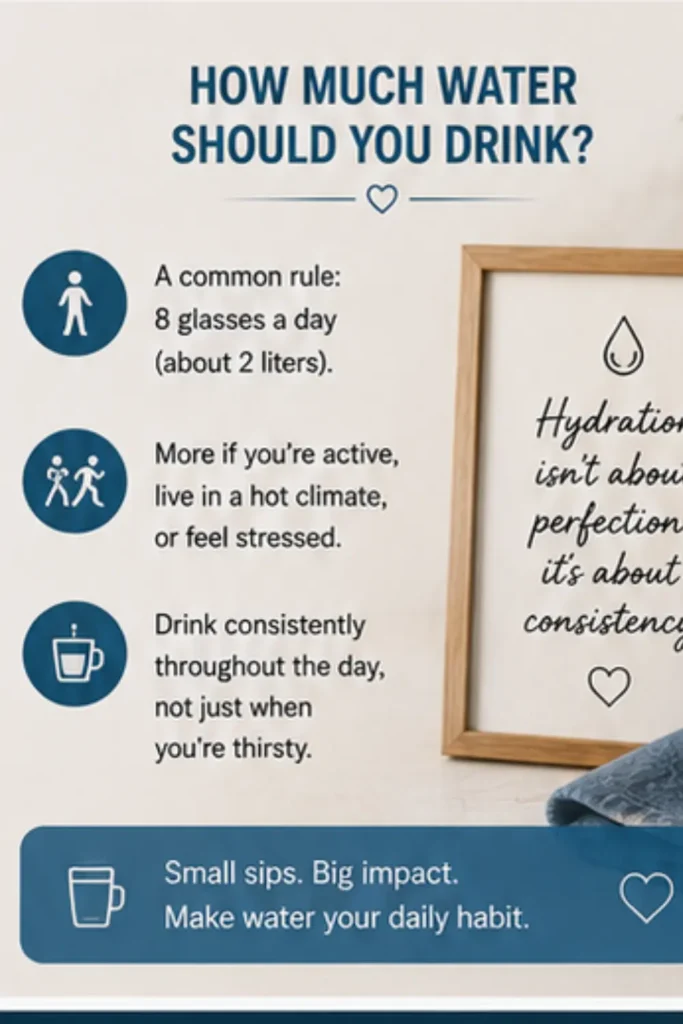
The old advice of drinking eight glasses a day is simple, but hydration is not one-size-fits-all.
Healthy adults often need around 2.7 liters of fluid per day for women and 3.7 liters per day for men, including fluids from beverages and food. About 20 percent of total water intake can come from food such as fruits and vegetables.
However, your needs may increase if you:
- Exercise regularly
- live in a hot or humid climate
- are pregnant or breastfeeding
- have a fever, vomiting, or diarrhea
- spend long hours outdoors
- consume high amounts of caffeine or salty foods
The best signs of good hydration are simple: you rarely feel very thirsty, and your urine is light yellow or nearly clear.
Water-Rich Foods Also Count
Hydration does not come only from your water bottle. Many fruits and vegetables contain high amounts of water and help support fluid intake.
Some excellent choices include:
- watermelon
- cucumber
- oranges
- strawberries
- lettuce
- zucchini
- tomatoes
- soups and broths
- These foods not only add hydration but also provide vitamins, minerals, and fiber that support overall health.
Wellness is never about one thing. It is about consistent daily habits, and hydration is one of the most important.
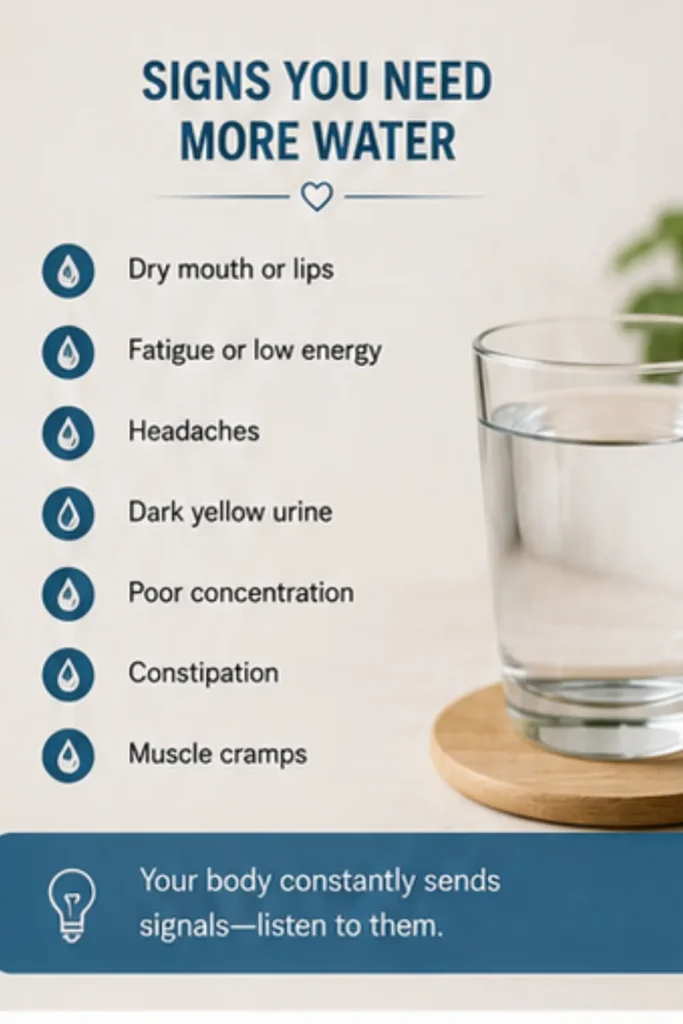
Signs You May Be Dehydrated
Many people live with mild dehydration without realizing it. They assume headaches, low focus, and tiredness are normal parts of a busy life.
Common signs include:
- dry mouth
- headaches
- fatigue
- dark yellow urine
- dizziness
- constipation
- muscle cramps
- poor concentration
- irritability
- Poor hydration can also contribute to overheating and kidney stones.
- Listening to your body early can prevent bigger health issues later.
Can You Drink Too Much Water?
Yes, although it is rare.
Drinking excessive amounts of water in a short time can lower sodium levels in the blood, a dangerous condition called hyponatremia. This is more common in endurance athletes or people forcing large amounts of water too quickly.
The goal is balance, not extremes. Water should support your body, not overwhelm it. Overhydration is uncommon in healthy adults but can be serious when it happens.
Simple Ways to Drink More Water
If drinking enough water feels difficult, small habits can make a big difference.
Carry a reusable water bottle with you. Drink a glass of water when you wake up. Have water with every meal. Choose water instead of sugary drinks when dining out. Add lemon, mint, or cucumber for natural flavor if plain water feels boring.
Consistency matters more than perfection.
Hydration should not feel like a challenge. It should become a normal part of your lifestyle.
Final Thoughts :
Water may not come in a fancy package or promise overnight transformation, but it remains one of the most powerful tools for better health.
It supports your brain, heart, digestion, skin, kidneys, muscles, and energy levels. It helps with weight management, improves focus, and keeps your body functioning at its best. Few things in wellness offer such wide-ranging benefits with so little cost.
In a world searching for the next health breakthrough, the answer may already be in your glass.
Water is not just a drink. It is daily medicine.
Drink it with intention, and your body will thank you for it.