
In a world full of crash diets, detox teas, and “lose 10 kilos in 10 days” promises, it is easy to believe that weight loss requires suffering. Many people think skipping meals, cutting carbs completely, or surviving on salads is the only path to getting lean.
The truth is much simpler and far healthier.
Sustainable weight loss does not come from starving yourself. It comes from understanding your body, eating smarter, building better habits, and creating a lifestyle you can maintain for years, not just weeks.
If you are tired of feeling hungry, frustrated, and stuck in the cycle of losing and regaining weight, this guide will show you how to lose weight the right way without starving yourself.
Why Starving Yourself Never Works
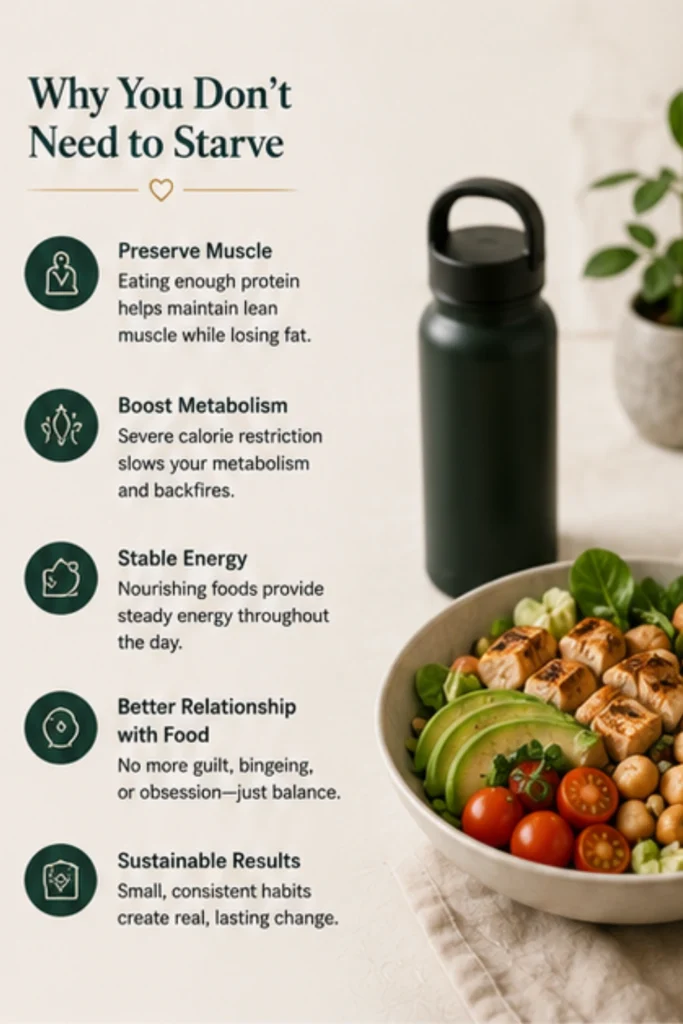
When people drastically cut calories, the body sees it as a threat rather than a solution. Instead of helping, your body responds by:
- Slowing metabolism
- Increasing hunger hormones
- Reducing energy levels
- Triggering intense cravings
- Increasing the risk of binge eating
This is why crash diets often fail. You may lose weight quickly at first, but most people regain it because the method is impossible to sustain.
- The goal is not to eat less forever.
- The goal is to eat better.
Step 1: Focus on a Calorie Deficit, Not Starvation
What Is a Calorie Deficit?
Weight loss happens when you consistently consume fewer calories than your body burns. This is called a calorie deficit.
However, a calorie deficit should be moderate, not extreme.
Why Moderate Deficits Work Better
A small daily deficit is far more effective than severe restriction because it helps you:
- Preserve muscle
- Maintain energy
- Stay consistent
- Avoid binge eating
- Support hormonal balance
- Think of it this way:
- Consistency beats intensity every single time.
Step 2: Prioritize Protein at Every Meal
Why Protein Matters
Protein is one of the most powerful tools for weight loss. It helps by:
- Keeping you full longer
- Reducing cravings
- Supporting muscle retention
- Increasing calorie burn during digestion
- Improving body composition
- Best Sources of Protein
Good protein-rich foods include:
- Eggs
- Chicken breast
- Fish
- Greek yogurt
- Cottage cheese
- Lentils
- Beans
- Tofu
- Paneer
Whey protein if needed
- Simple Protein Swaps
- Instead of starting your day with toast and tea alone, try eggs or yogurt.
- Instead of only rice for lunch, add chicken, dal, paneer, or fish.
Small changes create big results.
Step 3: Fill Half Your Plate with Fiber-Rich Foods
Why Fiber Helps Weight Loss
Fiber helps you feel satisfied without adding excessive calories.
It slows digestion, improves gut health, stabilizes blood sugar, and reduces unnecessary snacking.
Best High-Fiber Foods
Include more of these foods in your diet:
- Vegetables
- Fruits
- Oats
- Brown rice
- Whole grains
- Chia seeds
- Flaxseeds
- Beans
- Lentils
- Sweet potatoes
- The Ideal Plate Formula
- The easiest strategy is:
- Half vegetables, quarter protein, quarter carbs
- Simple and effective.
Step 4: Stop Drinking Your Calories
Hidden Calories in Drinks
Many people struggle with weight loss because they forget about liquid calories.
Common examples include:
- Sugary tea and coffee
- Soft drinks
- Packaged juices
- Milkshakes
- Fancy coffees
- Alcohol
- Smoothies loaded with extras
- Better Drink Choices
- Choose more of these instead:
- Water
- Lemon water
- Black coffee in moderation
- Green tea
- Unsweetened tea
- Coconut water in moderation
- Sometimes what feels like hunger is actually dehydration.
Drink first. Snack second.
Step 5: Learn Portion Control
You Do Not Need to Ban Your Favorite Foods
Weight loss becomes sustainable when you learn how to enjoy food without overeating.
Helpful strategies include:
- Using smaller plates
- Eating slowly
- Avoiding distracted eating
- Stopping at 80 percent full
- Serving food instead of eating from packets
- Planning treats instead of cheat days
- Portion Control Is Freedom
- Pizza is not the problem.
- Eating an entire pizza every weekend is.
Step 6: Move More, Even Without the Gym
Exercise Does Not Have to Be Extreme
You do not need brutal workouts to lose weight.
Walking is one of the most underrated fat-loss tools.
Simple Ways to Stay Active
Aim for:
- Daily walking
- Strength training two to four times weekly
- Basic bodyweight exercises
- Cycling
- Swimming
- Dancing
- Sports you genuinely enjoy
- Exercise should support your life, not punish you.
- The best workout is the one you can keep doing.
Step 7: Sleep Better to Lose Better
How Sleep Affects Weight Loss
Poor sleep makes weight loss harder.
Lack of sleep can:
- Increase hunger
- Raise cravings for sugar
- Reduce workout performance
- Increase stress hormones
- Slow fat loss
- Better Sleep Habits
Aim for:
- Seven to nine hours of sleep
- A regular sleep schedule
- Less screen time before bed
- Reduced late-night snacking
- Sometimes better sleep improves weight loss faster than stricter dieting.
Step 8: Manage Stress Before It Manages You
The Link Between Stress and Weight Gain
Stress eating is real.
When stress rises, cravings rise too.
You may not be hungry. You may simply be overwhelmed.
Healthy Ways to Handle Stress
Try:
- Walking after work
- Journaling
- Meditation
- Talking to someone
- Deep breathing
- Structured meal timing
- Sustainable weight loss is not just physical.
- It is emotional too.
Step 9: Track Habits, Not Just the Scale
The Scale Does Not Tell the Full Story
Water retention, digestion, hormones, and muscle gain all affect body weight.
Instead of obsessing over numbers, track:
- Energy levels
- Waist measurements
- Strength improvements
- Sleep quality
- Step count
- Protein intake
- Consistency
- Focus on Long-Term Progress
- Progress is more than kilograms.
- It is about becoming healthier, stronger, and more consistent.
Step 10: Be Patient Because Real Results Take Time
Slow Progress Is Healthy Progress
Healthy weight loss is slow.
But slow is good.
Slow means:
- Less muscle loss
- Better habits
- Stronger metabolism
- Lower rebound risk
- Long-term success
- Choose Lasting Results
- Fast weight loss looks exciting.
- Lasting weight loss changes lives.
Conclusion:
Weight loss without starving yourself is not only possible, it is the smartest approach.
- Forget punishment.
- Forget guilt.
- Forget extreme diets.
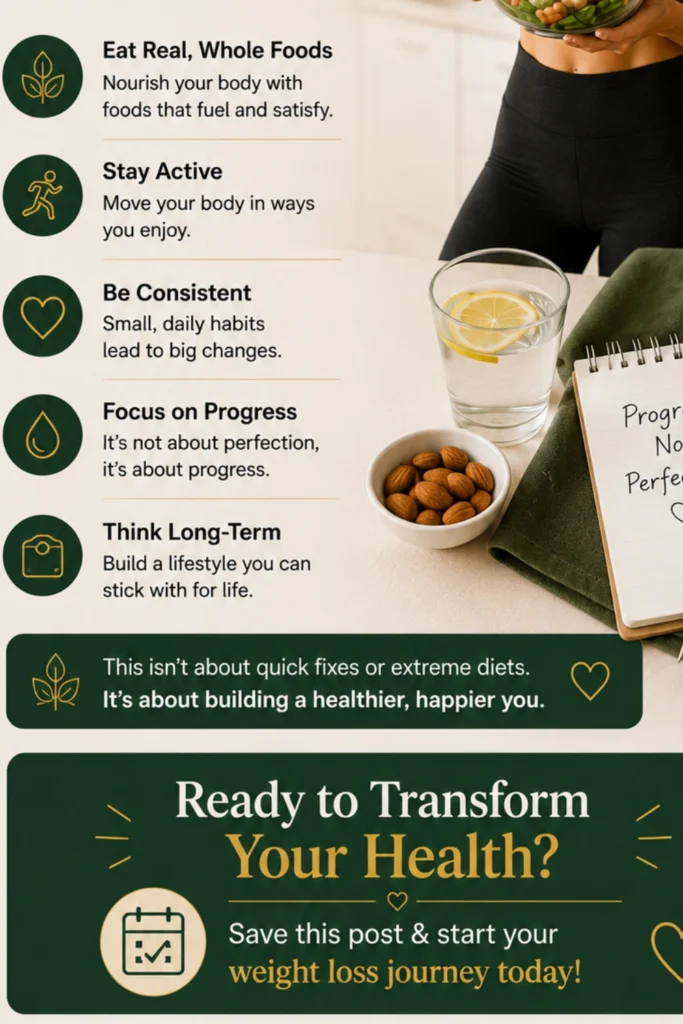
- Real transformation comes from:
- Eating enough protein
- Choosing whole foods
- Managing portions
- Moving regularly
- Sleeping well
- Handling stress
- Staying consistent
- You do not need to suffer to become healthier.
- You need a system you can actually live with.
Because the best diet is not the fastest one.
It is the one you never have to quit.