
We all want healthy, glowing skin. In the search for smoother texture, brighter skin, and that fresh “glass skin” look, many people end up doing one thing too much—exfoliating.
A little exfoliation can help remove dead skin cells and improve skin texture, but too much of it can seriously damage your skin barrier. This often happens when people use too many exfoliating acids, harsh scrubs, strong retinol products, or over-cleanse their face in the hope of getting faster results.
Instead of glowing skin, the result is often redness, burning, dryness, irritation, breakouts, and skin that suddenly feels sensitive to everything.
If your face feels tight, stings when you apply moisturizer, looks unusually shiny but dry at the same time, or becomes flaky and inflamed, your skin barrier may be damaged.
The good news is that your skin can recover. It just needs the right care, patience, and a much simpler routine.
Let’s understand the best skincare routine for repairing a damaged skin barrier after over-exfoliation and how to help your skin heal properly.
What Is the Skin Barrier?
Your skin barrier is the outermost protective layer of your skin. Think of it like your skin’s natural shield.
Its main job is to keep moisture inside your skin and protect it from pollution, bacteria, harsh weather, and irritation from outside elements.
This barrier is made up of skin cells and natural fats like ceramides, cholesterol, and fatty acids. When it is healthy, your skin feels soft, balanced, calm, and hydrated.
But when this barrier gets damaged, your skin starts losing moisture quickly and becomes more sensitive and reactive.
Over-exfoliation is one of the most common reasons this happens.
Using too many acids, scrubbing too hard, layering strong active ingredients, or washing your face too often can weaken this protective layer and leave your skin stressed and irritated.
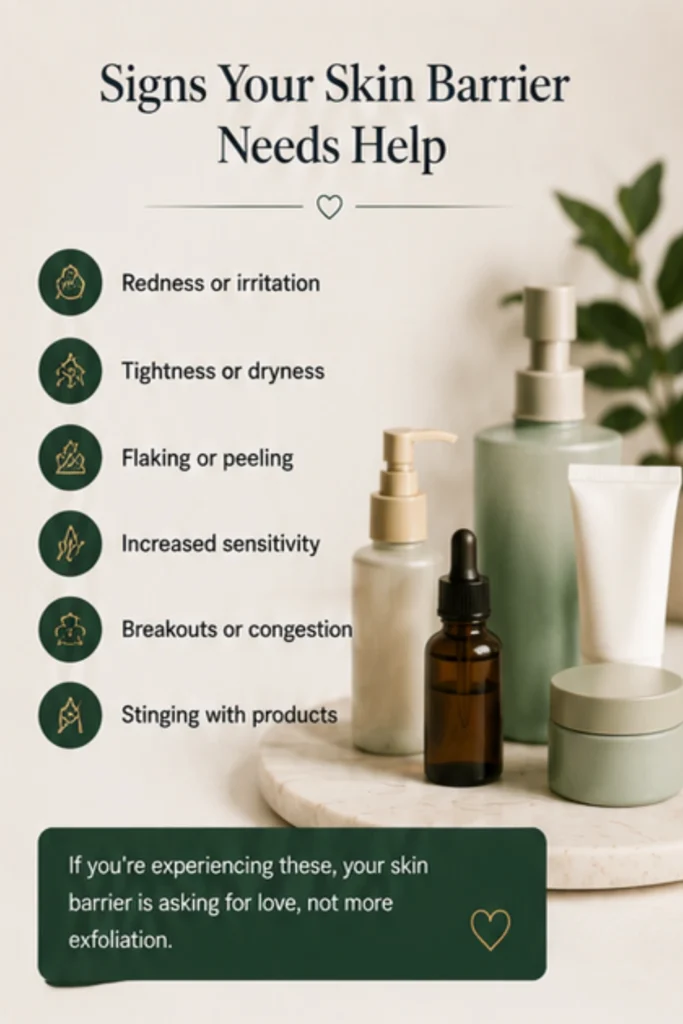
Signs Your Skin Barrier Is Damaged
Sometimes people confuse barrier damage with acne or dryness, but there are clear signs your skin is asking for help.
Common signs include:
- Redness and irritation
- Burning or stinging after applying skincare
- Tight, dry, or rough skin
- Flaking and peeling
- Increased sensitivity
- Sudden breakouts
- Itchiness
- A shiny but dehydrated look
- Skin that feels raw or uncomfortable
If products you used before suddenly start burning your skin, that is often a strong sign that your skin barrier is compromised.
The Best Skincare Routine for Damaged Skin Barrier
When your skin barrier is damaged, the goal is not glowing skin.
The goal is healing.
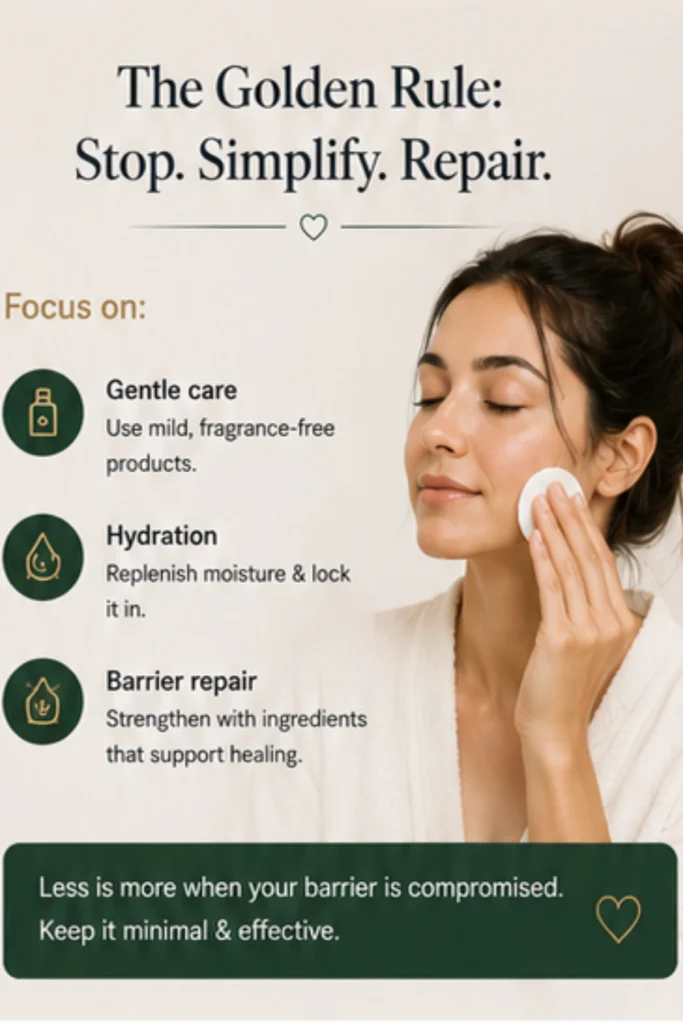
This means your routine should become as simple as possible.
Forget complicated 10-step routines for now.
Your skin needs rest, not more active ingredients.
The basic recovery routine looks like this:
Cleanser → Moisturizer → Sunscreen
That’s enough.
Sometimes, less really is more.
Morning Routine (AM)
Step 1: Use a Gentle Cleanser
The first step is switching to a mild, non-stripping cleanser.
Harsh face washes can make barrier damage even worse, especially strong foaming cleansers or exfoliating face washes.
Look for:
- Cream cleansers
- Lotion-based cleansers
- Fragrance-free products
- pH-balanced formulas
- Gentle hydrating cleansers
If your skin feels extremely irritated, even washing with plain lukewarm water in the morning can be enough.
Avoid hot water because it can increase dryness and irritation.
Also avoid:
- Salicylic acid cleansers
- Glycolic acid face washes
- Physical scrubs
- Cleansing brushes
- Strong foaming face washes
Your skin needs comfort, not deep cleansing.
Step 2: Apply a Barrier-Repair Moisturizer
This is the most important step in your healing routine.
A good moisturizer helps repair your skin barrier by restoring hydration and replacing the natural lipids your skin has lost.
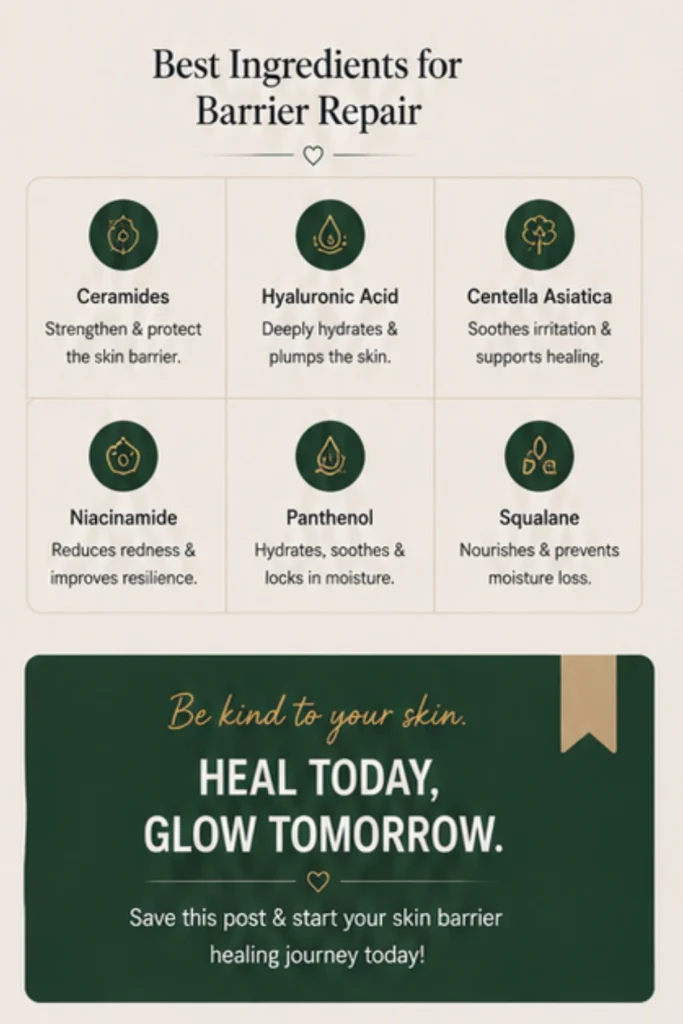
Look for ingredients like:
- Ceramides
- Glycerin
- Hyaluronic acid
- Panthenol
- Squalane
- Cholesterol
- Fatty acids
- Colloidal oatmeal
- Niacinamide (in low strength)
Ceramides are especially helpful because they are a natural part of your skin barrier and help lock moisture in.
Apply moisturizer while your skin is still slightly damp. This helps your skin hold onto hydration better.
Don’t wait too long after washing your face.
Step 3: Never Skip Sunscreen
This step is often ignored, but it is extremely important.
When your skin barrier is damaged, your skin becomes more vulnerable to sun damage, irritation, and pigmentation.
Without sunscreen, healing becomes slower.
Use:
- Broad-spectrum sunscreen
- SPF 30 or higher
- Fragrance-free formulas
- Mineral sunscreen if your skin is extra sensitive
- A lightweight hydrating sunscreen often works best during recovery.
- Daily SPF is not optional—it is part of the healing process.
- Night Routine (PM)
Step 1: Cleanse Gently Again
At night, remove sunscreen, dirt, and pollution using the same gentle cleanser.
There is no need for aggressive double cleansing unless you wear heavy makeup.
Even then, choose something gentle.
Avoid strong cleansing oils or harsh cleansing balms if your skin feels irritated.
Again, use lukewarm water—not hot water.
Simple and gentle is the goal.
Step 2: Moisturizer + Extra Protection
At night, your skin repairs itself naturally, so this is the best time to support healing.
Apply a richer layer of moisturizer before bed.
If your skin feels extremely dry, flaky, or irritated, you can seal in moisture with a thin layer of:
- Petrolatum
- Healing balm
- Barrier repair ointment
This helps reduce water loss overnight and allows your skin to recover faster.
You do not need a thick layer—just enough to protect the skin.
What You Should Stop Immediately
This part is very important.
If your skin barrier is damaged, some products need to go on pause.
Stop using:
- AHAs like glycolic acid and lactic acid
- BHAs like salicylic acid
- Retinol and retinoids
- Strong Vitamin C serums
- Benzoyl peroxide
- Face scrubs
- Chemical peels
- Exfoliating toners
- Clay masks
- Strong acne treatments
- Fragranced skincare products
Many people make the mistake of continuing exfoliation “just a little.”
That usually makes things worse.
Give your skin a full break from strong active ingredients.
This break may last two to four weeks, or even longer depending on how damaged your skin feels.
Healing comes first.
Results can wait.
How Long Does Recovery Take?
This depends on how much damage has been done.
Mild irritation may improve within one or two weeks.
More serious over-exfoliation can take a full skin cycle—around four weeks or sometimes longer.
The biggest mistake people make is changing products too often because they want faster results.
Consistency matters more than expensive skincare.
- Stick to the basics.
- Let your skin breathe.
- Recovery takes patience.
Can You Start Using Active Ingredients Again?
Yes—but very slowly.
Once your skin feels calm again, with no redness, burning, peeling, or tightness, you can slowly reintroduce active ingredients.
Start with:
Once a week only
Choose either:
One gentle exfoliating product
or
One retinol product
Not both together.
Do not restart your old routine all at once.
Your skin needs time to rebuild trust.
Watch how your skin reacts before increasing frequency.
Slow progress is safer than starting over again.
Lifestyle Habits That Help Healing
Skincare products are important, but daily habits also affect your skin barrier.
To support healing:
- Drink enough water
- Sleep properly
- Manage stress levels
- Eat healthy fats like nuts, seeds, and avocados
- Avoid smoking
- Reduce alcohol intake
- Use a humidifier if the air is dry
- Avoid very hot showers
Your skin heals better when your body is supported from the inside too.
Sometimes skincare is not just about products—it is also about routine and balance.
Common Mistakes People Make
Here are some common things that slow down recovery:
- Using too many “repair” products
- More products do not mean faster healing.
- In fact, too many products can cause even more irritation.
- Continuing acne treatments
- Strong acne treatments can be too harsh for damaged skin.
- Pause them until your barrier feels healthy again.
- Over-cleansing
- Washing your face too often strips away natural oils and makes barrier damage worse.
- Twice a day is enough.
- Sometimes once is enough.
- Being impatient
- Skin repair takes time.
- You cannot rush it.
- Trying too many quick fixes often delays healing.
Final Thoughts:
Damaging your skin barrier after over-exfoliation can be frustrating.
Your skin suddenly feels sensitive, irritated, and unpredictable, and even your favorite products may start burning.
But the good news is this—your skin can heal.
And usually, the best solution is not a complicated skincare routine.
It is a simple one.
Focus on:
- Gentle cleansing
- Deep moisturizing
- Daily sunscreen
- Stopping harsh active ingredients
- Giving your skin time
Healthy skin is not created by doing more.
It is created by doing what your skin actually needs.
Sometimes, the best skincare routine is simply stepping back and letting your skin recover.
Your skin barrier does not need aggressive treatment.
It needs patience, protection, and consistency.