
When Wellness Data Starts Creating Stress Instead of Better Health
A decade ago, most people judged their health by how they felt.
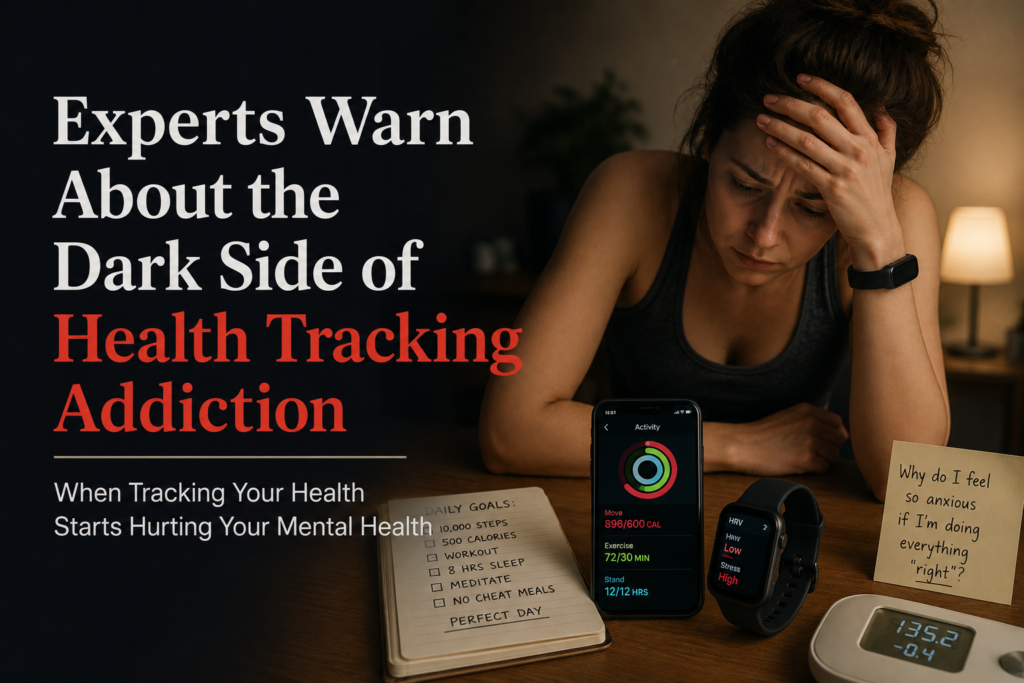
Today, many check a smartwatch before deciding whether they slept well, recovered properly, or are ready to exercise.
From fitness watches and smart rings to calorie-counting apps and sleep trackers, health technology has become a central part of modern wellness.
These tools promise deeper insights into our bodies, helping users track everything from heart rate and daily movement to stress levels and sleep quality.
For millions of people, these devices have been genuinely helpful. They encourage exercise, increase awareness, and make health data more accessible than ever before.
But as wearable technology becomes increasingly sophisticated, a growing number of doctors, sleep specialists, and mental health experts are warning about an unintended consequence: some people are becoming obsessed with tracking their health.
What begins as a healthy effort to improve wellness can gradually turn into a cycle of anxiety, compulsive monitoring, and constant self-optimization.
The result is a growing phenomenon often referred to as health tracking addiction.
The Era of Constant Self-Monitoring
The global wearable technology industry has expanded rapidly over the last few years. Smart devices can now measure:
- Daily activity levels
- Calories burned
- Heart rate variability
- Sleep quality
- Blood oxygen levels
- Stress indicators
- Recovery scores
- Workout performance
Many users appreciate having this information available at all times. The data can motivate positive habits and help individuals become more conscious of their lifestyle choices.
However, experts say there is a significant difference between using data as a tool and allowing data to dictate everyday life.
For some individuals, health tracking stops being informative and starts becoming emotionally controlling.
When Numbers Become More Important Than Feelings
One of the biggest concerns among healthcare professionals is that many people are beginning to trust wearable devices more than their own physical experiences.
A person may wake up feeling refreshed and energized but become convinced they had a poor night’s sleep because their smartwatch reports a low sleep score.
Someone else may feel exhausted, stressed, and physically drained but still push through an intense workout because their recovery metrics suggest they are ready to train.
In these situations, technology starts overriding intuition.
Experts argue that wearable devices can provide useful estimates, but they cannot fully understand how an individual feels physically or emotionally.
Human health is far more complex than a collection of numbers on a screen.
The Growing Pressure to Optimize Everything
Modern wellness culture often promotes the idea that every aspect of health should be optimized.
Social media feeds are filled with people sharing:
- Perfect sleep scores
- Workout streaks
- Step counts
- Recovery statistics
- Body composition changes
- Fitness achievements
This constant exposure can create the impression that good health is something that must be measured, tracked, and perfected every day.
For many users, wellness gradually shifts from self-care to performance.
Instead of asking:
“Do I feel healthy?”
People start asking:
“Did I hit all my targets today?”
The difference may seem small, but experts say it can significantly affect mental well-being.
The Rise of Orthosomnia
One of the clearest examples of health-tracking obsession is a condition known as orthosomnia.
The term was introduced by sleep researchers to describe an unhealthy fixation on achieving perfect sleep based on data collected from sleep-tracking devices.
People experiencing orthosomnia often become preoccupied with improving sleep metrics rather than focusing on how rested they actually feel.
They may:
- Check sleep reports immediately after waking up
- Worry excessively about sleep scores
- Spend hours researching sleep optimization strategies
- Feel anxious after receiving poor sleep data
- Stay in bed longer simply to improve tracker results
Ironically, the pressure to achieve perfect sleep can make sleeping more difficult.
Researchers studying orthosomnia have found that excessive attention to sleep data may contribute to sleep-related anxiety and worsen insomnia symptoms in some individuals.
Sleep specialists emphasize that consumer sleep trackers are not medical-grade diagnostic tools. While they can provide useful estimates, they cannot perfectly measure sleep quality or accurately diagnose sleep disorders.
How Health Tracking Can Increase Anxiety
For individuals who are naturally perfectionistic, health tracking may become a source of psychological stress.
Daily health metrics naturally fluctuate.
Sleep quality changes.
Heart rate changes.
Stress levels change.
Recovery scores change.
These variations are normal.
However, some users begin interpreting every fluctuation as a sign that something is wrong.
Experts say this can lead to:
1. Health Anxiety
Users may become overly concerned about minor changes in their data, even when there are no actual health problems.
2. Compulsive Monitoring
Many people develop habits of checking health statistics repeatedly throughout the day.
3. Guilt and Self-Criticism
Missing activity goals or breaking fitness streaks may create feelings of failure that are disproportionate to the situation.
4. Reduced Enjoyment of Healthy Habits
Exercise, sleep, and nutrition can become stressful tasks rather than enjoyable parts of a healthy lifestyle.
Instead of improving wellness, the technology begins creating additional pressure.
The Problem With Chasing Perfect Scores
One of the most common mistakes users make is assuming that health metrics must always improve.
In reality, health is dynamic.
Stressful workweeks, travel, illness, family responsibilities, and countless other factors influence physical performance.
Experts warn that pursuing perfect numbers can create unrealistic expectations.
For example:
A person who sleeps seven healthy hours may become frustrated because their device awards them a score of 78 instead of 90.
Someone who completes a productive workout may still feel disappointed because they did not burn as many calories as expected.
The focus shifts away from real progress and toward arbitrary digital targets.
Over time, this mindset can undermine motivation and create unnecessary stress.
What Experts Recommend Instead
Health professionals are not suggesting that people stop using wearable devices altogether.
In fact, many experts acknowledge that these technologies can be incredibly valuable when used appropriately.
The key is maintaining perspective.
1. Use Data as a Guide, Not a Judge
Metrics should provide information, not determine self-worth.
2. Focus on Long-Term Trends
Individual daily scores matter far less than consistent habits over time.
3. Listen to Your Body
Physical sensations, mood, energy levels, and overall well-being remain important indicators of health.
4. Take Breaks From Tracking
Occasionally removing a smartwatch or stepping away from health apps can help restore balance.
5. Avoid Perfectionism
There is no such thing as a perfect sleep score, perfect workout, or perfect health metric.
Health is about sustainability, not constant optimization.
Wellness Should Feel Better, Not More Stressful
The rapid growth of wearable technology reflects something positive: people care more about their health than ever before.
But experts warn that wellness can become unhealthy when every step, heartbeat, calorie, and hour of sleep is treated as a performance metric.
Technology can provide valuable insights, but it cannot replace self-awareness, common sense, or the ability to listen to your body.
The healthiest relationship with health tracking is one where data supports better decisions without becoming an obsession.
After all, true wellness is not measured solely by algorithms, scores, or streaks.
It is reflected in how you feel, how you function, and how sustainably you can maintain healthy habits over the long term.
Final Thought:
Wearable devices have the power to improve lives, encourage healthier behavior, and increase awareness of personal wellness. But experts say the goal should never be perfect numbers.
The goal should be a healthier life.
And sometimes, the healthiest thing a person can do is stop checking the data for a moment and simply pay attention to how they feel.