
For years, healthy eating seemed relatively straightforward. Fresh fruits, vegetables, whole grains, yogurt, cereal, protein snacks — these were the staples many people trusted. But as nutrition science evolves, experts are urging consumers to take a closer look at what’s really inside many foods marketed as “healthy.”
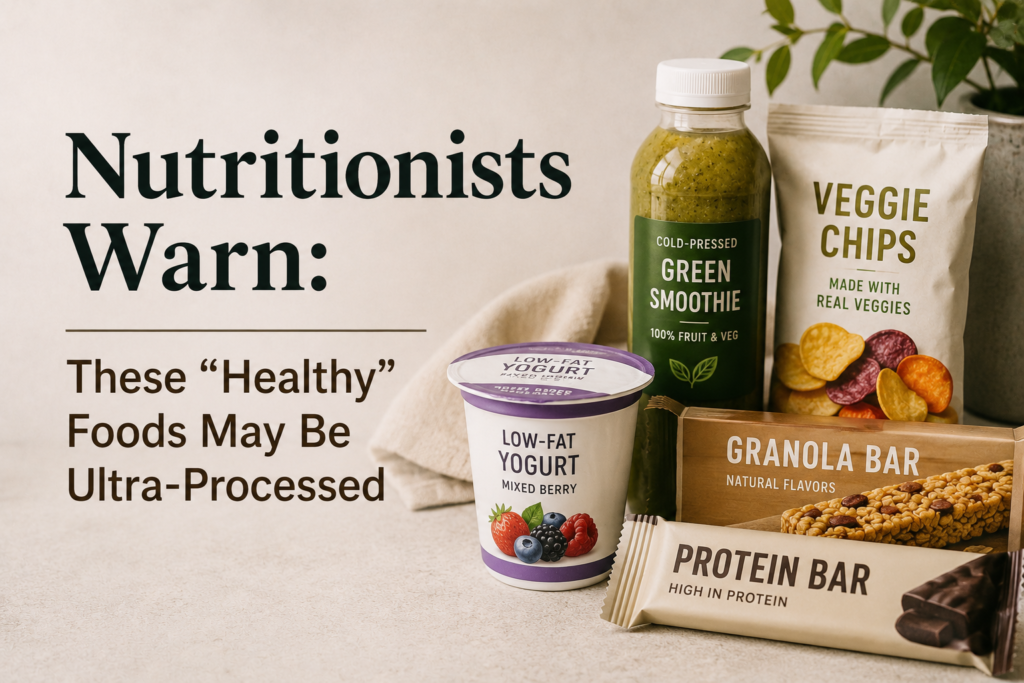
A growing number of nutritionists and public health researchers are raising concerns about ultra-processed foods, often referred to as UPFs. While the term may sound technical, the concept is becoming increasingly relevant in everyday life because many products carrying wellness-focused labels may still be heavily industrialized foods.
What surprises many consumers is that ultra-processed foods are not limited to fast food, packaged chips, or sugary sodas. Some products positioned as nutritious choices — including flavored yogurt, granola bars, protein snacks, breakfast cereals, and even certain plant-based foods — may also fall into this category.
The issue is not simply about calories or fat content. Experts say the deeper concern lies in how these foods are manufactured, what ingredients are added during processing, and how regularly consuming them may affect long-term health.
Understanding Ultra-Processed Foods
Not all processed foods are unhealthy. In fact, processing can improve food safety, shelf life, and convenience. Milk is pasteurized, vegetables are frozen, and beans are canned — all forms of processing that can still support a balanced diet.
Ultra-processing, however, is different.
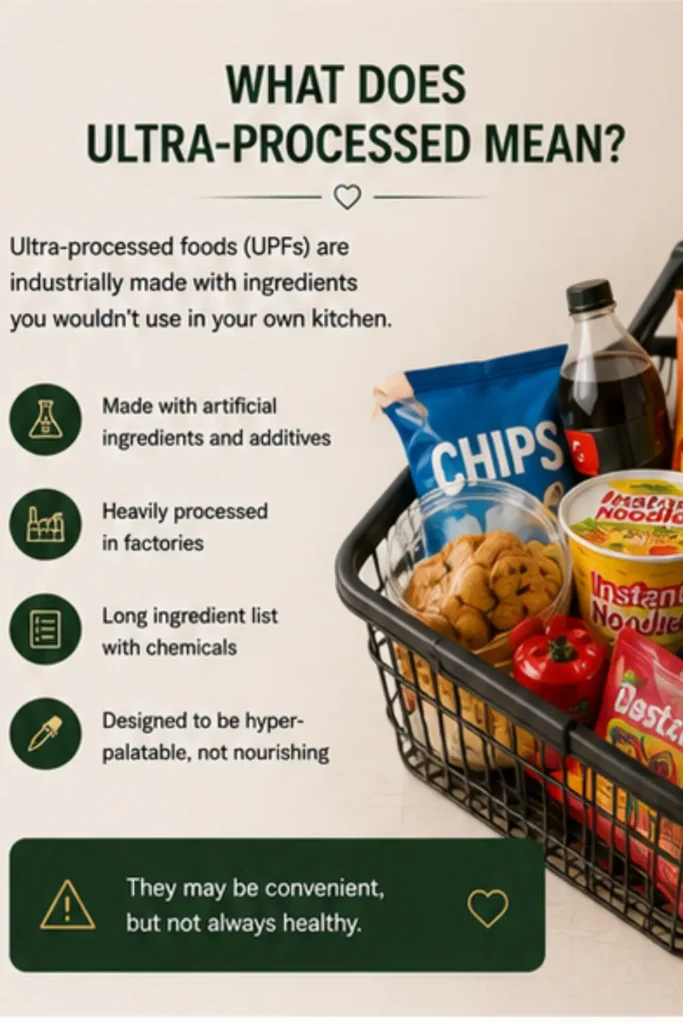
Ultra-processed foods are typically manufactured using industrial methods and ingredients that are rarely found in a home kitchen. These products often contain additives such as artificial flavorings, emulsifiers, preservatives, sweeteners, stabilizers, colorings, and refined starches designed to improve texture, taste, or shelf life.
Nutrition researchers explain that many UPFs are engineered to be highly palatable and convenient, which may encourage overconsumption. Unlike minimally processed foods, they are often stripped of natural fiber and nutrients while being high in sodium, sugar, unhealthy fats, and refined carbohydrates.
This category now represents a significant portion of modern diets worldwide, especially in urban lifestyles where convenience frequently drives food choices.
Why Nutritionists Are Concerned
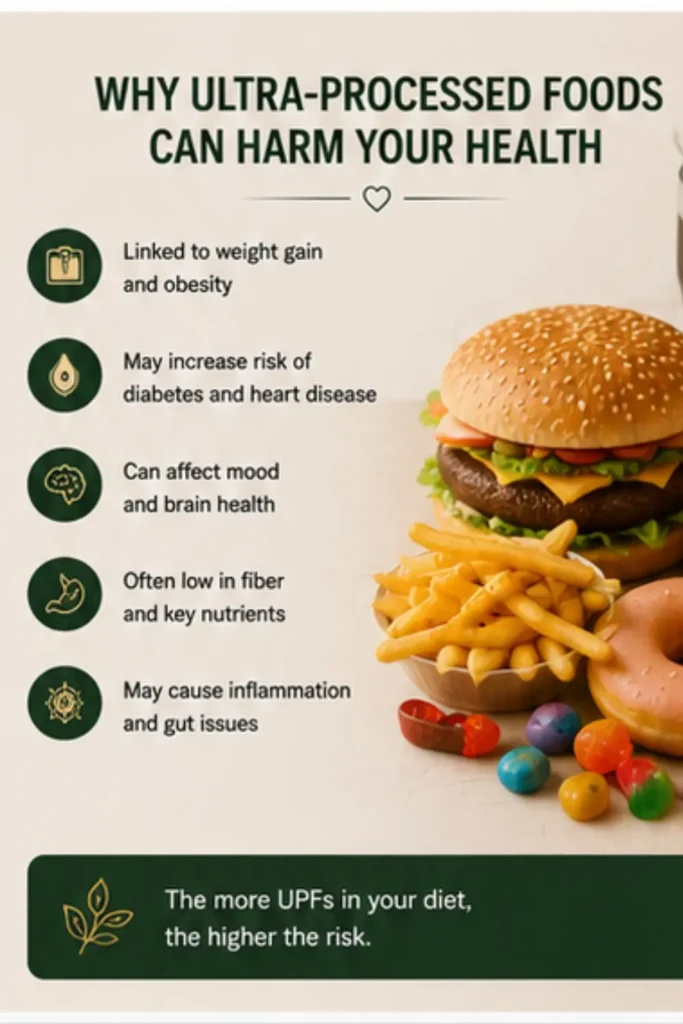
In recent years, multiple large-scale studies have linked high consumption of ultra-processed foods with a variety of health concerns, including obesity, cardiovascular disease, type 2 diabetes, digestive disorders, chronic inflammation, and poor metabolic health.
Some research has also explored possible links between diets high in UPFs and mental health conditions such as anxiety and depression, although experts note that more long-term evidence is still needed.
One reason for concern is that ultra-processed foods are often marketed in ways that create a “health halo.” Terms like “high protein,” “low fat,” “natural,” “multigrain,” or “plant-based” can make products appear healthier than they actually are.
As a result, many consumers may unknowingly rely on foods that appear nutritious but are still heavily processed behind the scenes.
“Healthy” Foods That May Actually Be Ultra-Processed
1. Flavored Yogurt
Yogurt has long been associated with gut health, calcium, and protein. Plain yogurt, particularly varieties containing live cultures, can absolutely be part of a healthy diet.
However, nutritionists say flavored yogurts are often a different story.
Many commercial fruit yogurts contain large amounts of added sugar along with artificial flavors, thickeners, stabilizers, and modified starches that enhance texture and sweetness. In some cases, a single serving can contain sugar levels similar to dessert products.
The problem is that packaging often emphasizes probiotics or protein while downplaying added ingredients.
A Smarter Option
Choose plain or unsweetened Greek yogurt and add your own fruit, nuts, cinnamon, or honey. This gives you better control over both sugar intake and ingredient quality.
2. Protein Bars
Protein bars are marketed as convenient fuel for busy professionals, gym-goers, and health-conscious consumers. But nutrition experts say many of these products resemble candy bars more than balanced snacks.
Some bars contain highly refined protein isolates, artificial sweeteners, syrups, hydrogenated oils, sugar alcohols, and multiple preservatives. Long ingredient lists are often a sign that the product has been heavily formulated rather than built from whole-food ingredients.
While protein itself is important, the delivery method matters.
A Smarter Option
Look for bars made with simple ingredients such as nuts, seeds, oats, dates, or nut butter. Even better, whole-food snacks like fruit with nuts or boiled eggs can provide protein without excessive processing.
3. Granola and Granola Bars
Granola developed a healthy reputation decades ago because it was associated with oats, nuts, and natural ingredients. Yet many supermarket versions contain significant amounts of added sugar, refined oils, syrups, chocolate coatings, and flavor enhancers.
Granola bars can be particularly misleading because they are often promoted as “wholesome,” “energy-boosting,” or “fiber-rich,” despite containing ingredients similar to processed snack foods.
Nutritionists caution that consumers should not assume oat-based automatically means healthy.
A Smarter Option
Choose granola products with minimal added sugar and recognizable ingredients, or prepare homemade granola using rolled oats, seeds, nuts, and natural sweeteners in moderation.
4. Plant-Based Milks
The popularity of almond, oat, soy, and coconut milk has surged as more consumers reduce dairy consumption. While plant-based milks can certainly fit into a balanced diet, not all versions are nutritionally equal.
Some flavored or sweetened varieties contain emulsifiers, gums, oils, artificial flavorings, and added sugars designed to improve texture and shelf stability.
Nutritionists say the concern is not necessarily the plant milk itself, but the degree of industrial formulation involved in some products.
A Smarter Option
Unsweetened plant milks with short ingredient lists are generally better choices. Fortified versions containing calcium and vitamin D may also provide added nutritional benefits.
5. Breakfast Cereals
Breakfast cereals are one of the most heavily marketed “health foods” in modern supermarkets. Boxes labeled “whole grain,” “high fiber,” or “heart healthy” can create the impression of a highly nutritious breakfast.
But many cereals remain heavily processed products containing refined grains, sugar coatings, flavorings, and additives.
Even cereals targeted toward children often use wellness-focused packaging while containing surprisingly high sugar levels.
A Smarter Option
Look for cereals made with whole grains as the first ingredient and minimal added sugar. Traditional oats, unsweetened muesli, or homemade oatmeal remain some of the least processed breakfast options available.
6. Meal Replacement Shakes
Meal replacement drinks have become increasingly popular among people with hectic schedules. While some may serve a temporary purpose, nutritionists caution against relying on them as daily nutritional substitutes.
Many ready-to-drink shakes contain artificial sweeteners, stabilizers, preservatives, processed protein blends, and flavor enhancers.
Because they are engineered for convenience and long shelf life, they can sometimes prioritize formulation over food quality.
A Smarter Option
Homemade smoothies made with fruit, yogurt, nuts, seeds, and natural protein sources often provide more balanced nutrition with fewer additives.
7. Whole Wheat Bread
Consumers are often encouraged to choose brown bread over white bread, but experts say labels can sometimes be misleading.
Certain breads labeled “multigrain” or “whole wheat” still contain refined flour, preservatives, dough conditioners, emulsifiers, and added sugars.
Color alone is not a reliable indicator of nutritional quality.
A Smarter Option
Check ingredient labels carefully. Ideally, whole grain or whole wheat flour should appear as the first ingredient, and the ingredient list should remain relatively short and recognizable.
8. Low-Fat and Fat-Free Products
For decades, low-fat foods were marketed as the healthier choice. However, removing fat from products often changes taste and texture, leading manufacturers to compensate with added sugar, starches, artificial flavorings, or chemical stabilizers.
Nutrition experts now emphasize that fat itself is not always the problem — especially when consumed in moderate amounts from quality sources.
Ironically, some low-fat products may end up being more processed than their full-fat versions.
A Smarter Option
Moderately portioned minimally processed foods containing natural fats are often more satisfying and nutritionally balanced than highly modified low-fat alternatives.
How Consumers Can Identify Ultra-Processed Foods
Nutritionists encourage consumers to look beyond front-of-package marketing and focus instead on ingredient lists.
Common signs of ultra-processing include:
- Extremely long ingredient lists
- Artificial sweeteners or colors
- Ingredients difficult to pronounce
- Hydrogenated oils
- Emulsifiers and stabilizers
- Added sugars in multiple forms
- Refined starches and syrups
A simple rule many experts recommend is this: the closer a food is to its natural form, the better.
That does not mean every packaged food must be avoided. Rather, the goal is to build a diet where whole and minimally processed foods make up the majority of daily intake.
Not All Processed Foods Are Harmful
One of the biggest misconceptions surrounding the UPF discussion is the belief that all processed foods are unhealthy. Nutrition experts repeatedly stress that this is not true.
Frozen vegetables, canned beans, plain yogurt, frozen fruit, and minimally processed whole grain products can still provide valuable nutrients and convenience.
The issue is less about processing itself and more about the extent of industrial modification and the nutritional quality of the final product.
Healthy eating does not require perfection. Instead, it involves making informed choices more consistently over time.

Final Thoughts
The modern food industry has become exceptionally skilled at marketing products as healthy, natural, or fitness-friendly. But attractive packaging and wellness buzzwords do not always reflect nutritional quality.
As awareness around ultra-processed foods continues to grow, nutritionists are encouraging consumers to become more ingredient-conscious rather than relying solely on marketing claims.
Simple habits — reading labels carefully, choosing foods with recognizable ingredients, preparing more meals at home, and prioritizing minimally processed foods — can make a meaningful difference in long-term health.
Ultimately, truly healthy eating is not about chasing trends. It is about understanding what we are putting into our bodies and making choices that support overall well-being in a sustainable, realistic way.