
We live in a world where being busy is often seen as a badge of honor. Pushing harder, doing more, and never taking a day off is usually praised, especially in fitness. However, modern fitness science is now shifting toward smarter workout approaches instead of constant high intensity training. But the truth is, that mindset can actually hold you back. Rest and recovery are not signs of weakness. They are essential if you want to stay healthy, make progress, and avoid burnout.
If you have ever felt guilty for skipping a workout or taking a break, you are not alone. Many people feel that way. But understanding why your body needs rest can completely change how you approach your fitness and overall well-being.
What Do Recovery and Rest Days Really Mean?
Let’s keep this simple.
A rest day is when you take a full break from structured exercise. No gym sessions, no intense workouts. Just letting your body relax.
A recovery day is a bit different. You are still moving, but in a gentle way. Think walking, light stretching, yoga, or an easy bike ride. The goal is to stay active without putting stress on your body.
Both are important. You do not have to choose one over the other. In fact, a good routine usually includes both.
What Happens Inside Your Body After a Workout?
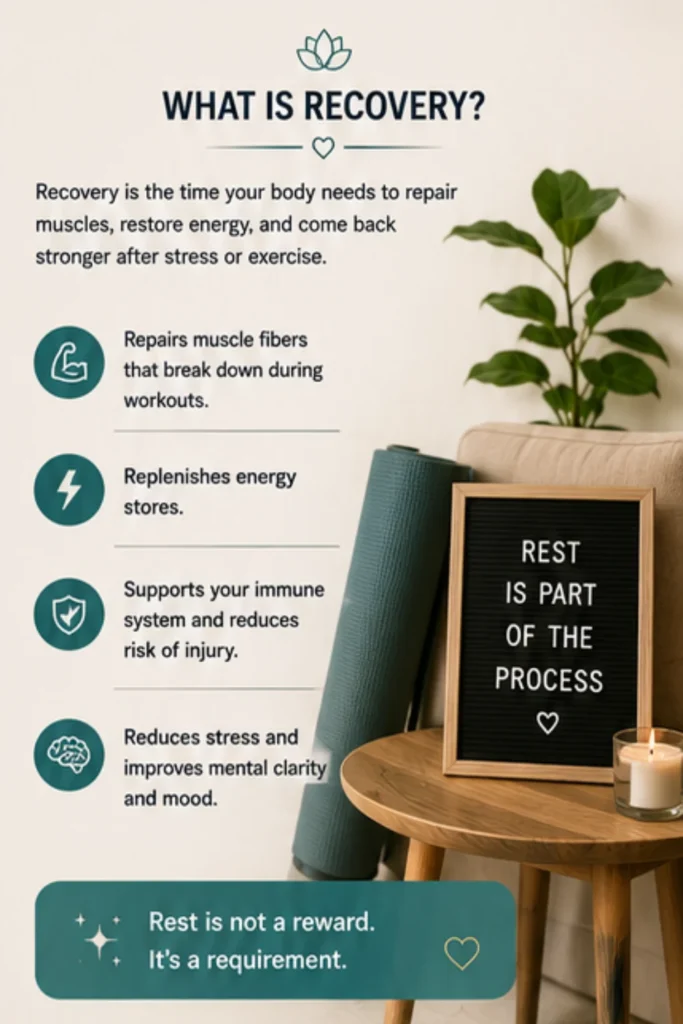
Every time you work out, especially when lifting weights or doing high intensity interval training, your muscles go through stress. Tiny tears form in the muscle fibers. This might sound like a bad thing, but it is actually how your body gets stronger.
The real magic happens after the workout. When you rest, your body repairs those tiny tears and builds the muscles back stronger than before.
If you skip rest and keep pushing, your body does not get the chance to fully recover. Over time, this can leave you feeling tired, weak, and more prone to injury.
Why Rest Days Matter More Than You Think
- Your Muscles Need Time to Grow
It might feel like you are making progress during your workout, but muscle growth actually happens when you rest. Without that recovery time, your efforts may not give you the results you expect.
- It Helps Prevent Injuries
Training every single day without a break puts a lot of stress on your joints and muscles. This can lead to pain, strain, or even long-term injuries. A rest day gives your body time to repair and reset.
- You Perform Better
Have you ever noticed how much stronger or more energetic you feel after a day off? That is not a coincidence. A rested body performs better. You can lift more, move faster, and train more effectively.
- Your Mind Gets a Break Too
It is not just your body that gets tired. Your mind does as well. Constant workouts can start to feel like a chore. Taking a day off can help you come back feeling refreshed and motivated.
- It Supports Overall Balance
Too much training can mess with your body’s natural balance. It can affect your mood, your energy levels, and even your sleep. Rest helps bring everything back into balance.
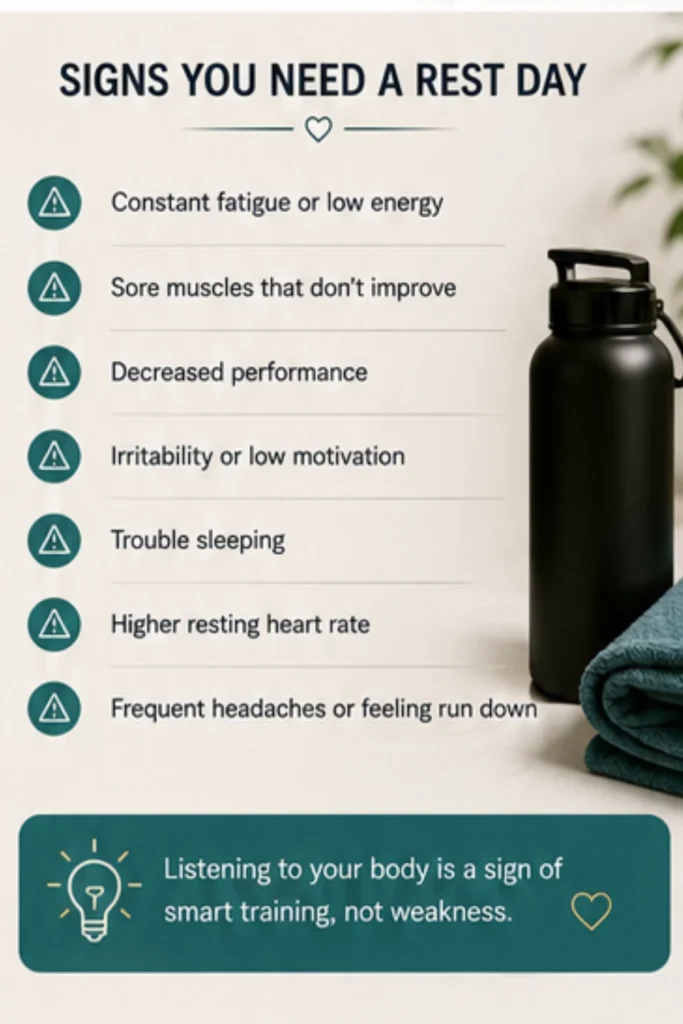
Signs Your Body Is Asking for a Break
Sometimes your body gives you clear signals that you need to slow down. The problem is, many people ignore them.
Here are a few signs to watch for:
- You feel sore all the time
- Your workouts feel harder than usual
- You are not seeing progress anymore
- You feel tired even after sleeping
- You are getting injured more often
- You feel unmotivated or irritated
If you notice these signs, it might be time to take a step back and give yourself a proper rest day.
What Is Active Recovery and Why Try It?
If the idea of doing nothing all day feels uncomfortable, active recovery can be a great option.
This means doing something light and easy. It keeps your body moving without adding stress.
You could go for a walk, do some stretching, try a gentle yoga session, or even just spend time moving around casually. These activities help improve blood flow, which can actually speed up recovery.
The key is to keep it easy. If it feels like a workout, you are probably doing too much.
How Many Rest Days Do You Actually Need?
A balanced routine usually combines strength training, cardio, mobility, and recovery for long-term health.
There is no one-size-fits-all answer here. It depends on your routine, your fitness level, and how your body feels.
If you are just starting out, you might need two or three rest days each week.
If you are more experienced, one or two days might be enough.
The important thing is to listen to your body. Some weeks you might need more rest, and that is completely fine.
Do Not Forget About Sleep
When we talk about recovery, we cannot ignore sleep. It is one of the most important parts of the process.
While you sleep, your body repairs itself, restores energy, and prepares for the next day. Without enough sleep, your recovery will never be complete.
Try to get around seven to nine hours of good-quality sleep each night. Small habits like sticking to a routine, reducing screen time before bed, and keeping your room calm and dark can make a big difference.
Eating Right Helps You Recover Faster
Food plays a big role in how well your body recovers.
After a workout, your body needs nutrients to repair and rebuild. Protein helps fix muscle tissue. Carbohydrates restore your energy. Healthy fats support overall body functions. And staying hydrated keeps everything running smoothly.
You do not need a complicated diet. Just focus on balanced, nourishing meals.
Changing the Way You Think About Rest
One of the hardest parts about taking rest days is the mental side of it. Many people feel like they are being lazy or falling behind.
But that is not true.
Rest is part of the process. Modern fitness trends now emphasize training for longevity rather than just pushing for short term results. It is just as important as the workout itself. Without it, your body cannot improve.
Instead of thinking of rest as doing nothing, think of it as giving your body what it needs to come back stronger.
Common Misunderstandings About Rest Days
A lot of people have the wrong idea about rest. Let’s clear up a few things.
Rest days do not make you lose progress. They actually help you improve.
Rest is not just for beginners. Everyone needs it, no matter how fit they are.
Feeling tired all the time is not a good sign. It usually means you need more recovery, not more workouts.
Building a Routine That Works
A good fitness routine is not just about how hard you train. It is about how well you balance effort and recovery.
You might train a few days a week, include some cardio, add in light recovery sessions, and take at least one full day off.
This kind of balance helps you stay consistent without pushing your body too far.
Conclusion:
At the end of the day, rest and recovery are not optional. They are essential.
Recovery has become one of the most important ideas in modern fitness trends.
If you want to feel better, get stronger, and stay consistent in the long run, you need to give your body time to recover.
Taking a break does not mean you are falling behind. It means you are being smart about your health.
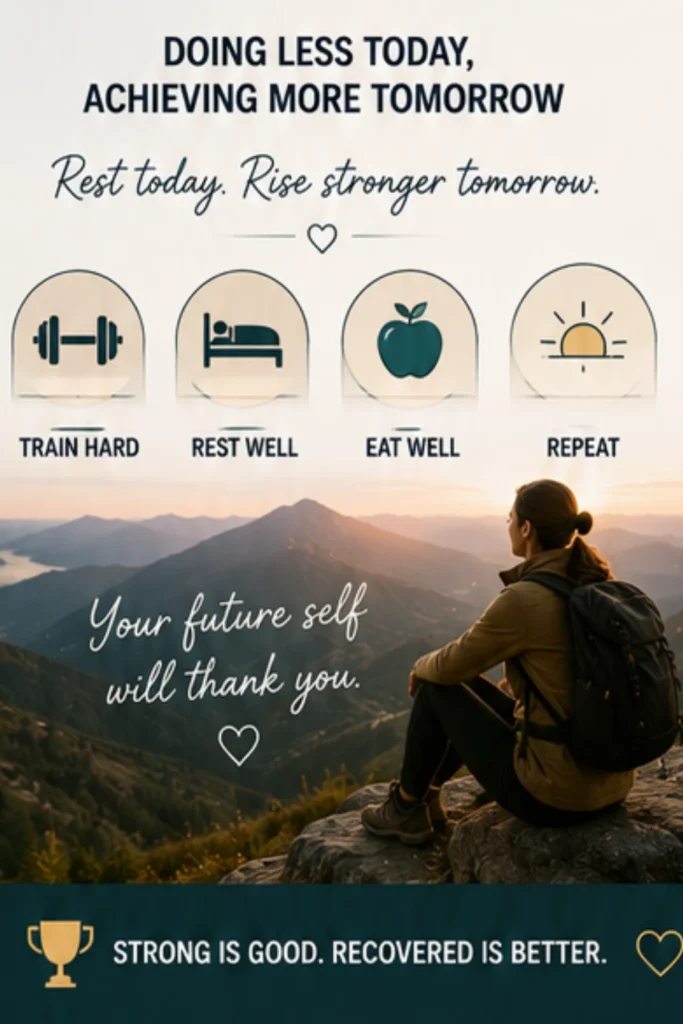
Sometimes, doing less really does help you achieve more.