
Intermittent fasting has become one of the most talked-about wellness trends in recent years. From fitness influencers to health professionals, many people claim it is the secret to weight loss, better energy, and improved overall health. But is intermittent fasting truly a miracle solution, or is it simply another health trend surrounded by hype?
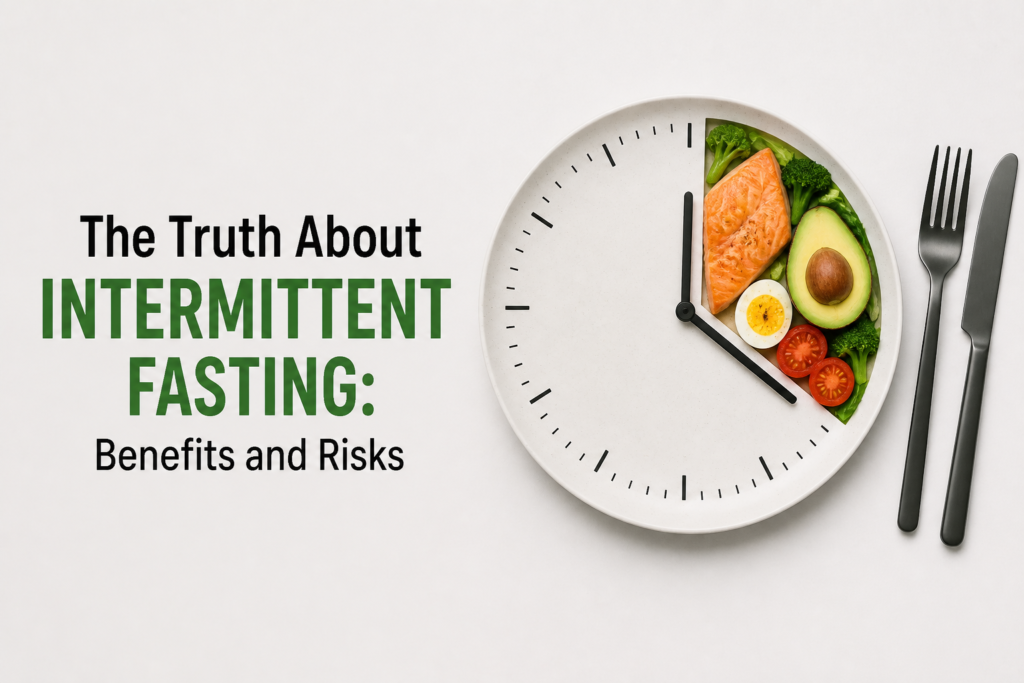
The truth lies somewhere in between.
Intermittent fasting is not a diet in the traditional sense. It does not tell you what to eat. Instead, it focuses on when you eat. This eating pattern involves cycling between periods of eating and periods of fasting. While it can offer real benefits for some people, it also comes with risks that should not be ignored.
Understanding both sides is important before making it part of your lifestyle.
What Is Intermittent Fasting?
Intermittent fasting is an eating pattern where you alternate between specific eating windows and fasting periods. During the fasting phase, you either avoid food completely or consume very low-calorie beverages like water, black coffee, or plain tea.
Some of the most common methods include:
- 16:8 Method
This involves fasting for 16 hours and eating during an 8-hour window. For example, eating only between 12 PM and 8 PM.
- 5:2 Method
You eat normally for five days of the week and significantly reduce calorie intake on the other two days.
- Alternate-Day Fasting
This approach involves fasting every other day or consuming only a small number of calories on fasting days.
- Early Time-Restricted Eating
This method focuses on eating earlier in the day and avoiding late-night meals, such as eating between 8 AM and 4 PM.
The goal is to give the body enough time without food so it can shift from using glucose for energy to using stored fat. Short-term studies suggest it may improve weight, blood sugar, cholesterol, blood pressure, and inflammation markers, though long-term effects are still less clear.
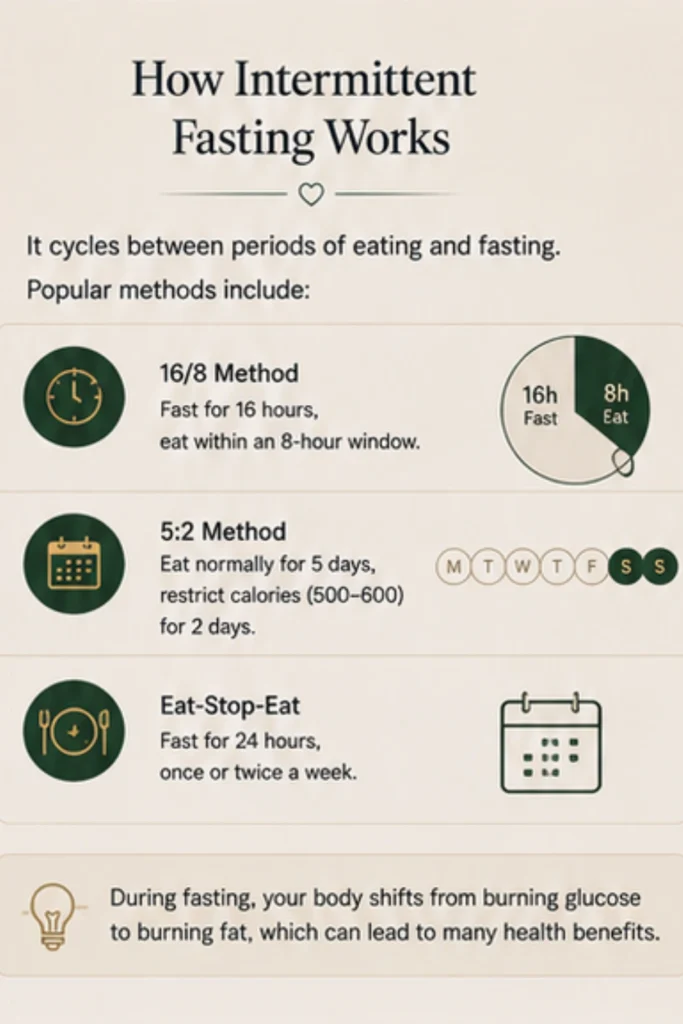
How Intermittent Fasting Works
When you eat regularly throughout the day, your body mainly uses glucose from food as its primary energy source. During fasting periods, insulin levels begin to drop, and the body starts using stored fat for fuel.
This metabolic switch may support fat loss and improve insulin sensitivity. Fasting may also trigger cellular repair processes and help the body focus on maintenance and recovery rather than constant digestion.
However, this does not mean fasting automatically leads to better health. The quality of food still matters. Eating unhealthy meals during your eating window can cancel out many of the benefits.
Potential Benefits of Intermittent Fasting
Let’s look at the real advantages of intermittent fasting when practiced correctly.
- Supports Weight Loss
Weight loss is the most common reason people try intermittent fasting.
By reducing the eating window, many people naturally consume fewer calories without strict calorie counting. This can make weight management feel simpler and more sustainable.
Some studies show that intermittent fasting can help reduce body weight and body fat, especially when paired with balanced nutrition and regular exercise. It may also help reduce overeating caused by mindless snacking late at night.
Still, fasting is not magic. If someone overeats during feeding hours, weight loss may not happen at all.
- May Improve Blood Sugar Control
Intermittent fasting may improve insulin sensitivity, which helps the body manage blood sugar more efficiently.
This can be especially helpful for people at risk of type 2 diabetes or metabolic syndrome. Stable blood sugar levels can also reduce energy crashes and intense cravings throughout the day.
However, people with diabetes should never start fasting without medical guidance, especially if they take insulin or blood sugar-lowering medication.
- May Improve Heart Health
Heart health may also benefit from structured fasting.
Research suggests intermittent fasting may help improve blood pressure, cholesterol levels, triglycerides, and inflammation markers. These are all important factors linked to cardiovascular disease.
But it is important to remember that these improvements are often stronger when weight loss also occurs. Fasting alone without healthier lifestyle habits may not create major results.
- Gives the Digestive System a Break
Many people constantly eat from morning until late at night. This can keep the digestive system working without much rest.
Intermittent fasting creates clear boundaries around eating, allowing digestion to slow down and the body to focus on other internal processes. Some people report less bloating, better digestion, and improved sleep when they stop eating earlier in the evening.
This structure can also reduce unhealthy late-night snacking, which is often linked to poor food choices.
- May Improve Mental Clarity
Some people notice sharper focus and better mental clarity during fasting periods.
This may be linked to more stable blood sugar levels and fewer energy crashes after heavy meals. Others feel more productive when they are not constantly thinking about food.
That said, not everyone experiences this benefit. Some people feel distracted, irritable, or mentally drained instead.
- Encourages Better Eating Discipline
One overlooked benefit of intermittent fasting is the awareness it creates around eating habits.
It can help people recognize emotional eating, boredom snacking, and unhealthy food routines. By following a structured schedule, many people become more intentional about food choices and portion sizes.
This mindset shift can be just as valuable as the physical benefits.
The Risks and Downsides of Intermittent Fasting
While intermittent fasting can be helpful, it is not suitable for everyone. In some cases, it may do more harm than good.
Understanding the risks is just as important as knowing the benefits.
- Hunger, Irritability, and Low Energy
The most common side effects happen in the beginning.
People often experience strong hunger, headaches, fatigue, dizziness, mood swings, or difficulty concentrating.
This is especially common for those who are used to frequent meals or high sugar intake.
For many people, these symptoms improve after the body adjusts. For others, they continue and make fasting difficult to maintain.
- Risk of Overeating
Some people become so hungry during fasting windows that they end up overeating once the eating period begins.
This can lead to bloating, poor digestion, and weight gain rather than weight loss.
A healthy fasting routine should not feel like a reward system where fasting leads to uncontrolled eating later.
Balance matters more than restriction.
- Not Ideal for People With Certain Medical Conditions
Intermittent fasting is not recommended for everyone.
- People who should be especially cautious include:
- Pregnant or breastfeeding women
- People with a history of eating disorders
- Individuals with diabetes on medication
- People recovering from illness or surgery
- Those with nutritional deficiencies
- People at high risk of bone loss or frequent falls
In these situations, fasting may increase stress on the body rather than support healing.
- Possible Hormonal and Menstrual Changes
For some women, aggressive fasting can affect energy levels, stress hormones, and menstrual cycles.
Skipping meals regularly or fasting too long may cause hormonal imbalance, especially when combined with intense exercise or low calorie intake.
Women often respond differently to fasting than men, so a more flexible and gentle approach may work better.
Listening to the body is essential.
- Social and Lifestyle Challenges
Food is often part of family life, celebrations, and social connection.
Strict fasting schedules can make dinners, gatherings, and travel more stressful. If someone feels constantly restricted or socially isolated because of fasting, the plan may not be sustainable.
Health habits should support life, not control it.
- Possible Muscle Loss
If fasting is combined with very low protein intake or no strength training, the body may lose lean muscle along with fat.
This is especially important for older adults, athletes, and people focused on body composition rather than just weight loss.
Preserving muscle requires proper nutrition and resistance exercise, not just long fasting hours.
How to Practice Intermittent Fasting Safely
If you want to try intermittent fasting, the safest approach is to start simple.
Begin with a 12-hour fasting window, such as finishing dinner at 8 PM and eating breakfast at 8 AM. This is often easier to maintain and less stressful on the body.
Other helpful tips include:
- Stay hydrated throughout the day
- Focus on whole, nutrient-dense foods
- Eat enough protein and fiber
- Avoid binge eating during feeding windows
- Prioritize sleep and stress management
- Stop if you feel consistently weak or unwell
Fasting should improve your well-being, not create exhaustion.
Final Thoughts:
Intermittent fasting is neither a miracle cure nor a dangerous trend for everyone. It is simply a tool, and like any tool, its value depends on how it is used.
For some people, it can support weight loss, improve blood sugar control, and create healthier eating habits. For others, it may lead to fatigue, stress, and an unhealthy relationship with food.
The truth about intermittent fasting is that it works best when it fits your body, your schedule, and your long-term health goals.
There is no single perfect eating pattern for everyone.
The best wellness strategy is always the one that is balanced, realistic, and sustainable. Instead of chasing trends, focus on building habits your body can trust for years to come.